India is a country blessed with adequate temperatures, climate, and soil type to produce high-quality agricultural products. Whether it is spices, fruits, vegetables, pulses, or grains, India produces them all.
And, due to exceptional quality, India is known to be the largest exporter of its produce all over the world. The UAE is one of the top importers of India’s agricultural yield. India exported its agricultural produce worth US$ 51.2 billion in the FY 2025.
Among various agricultural products that India exports, spices are a top choice of imports in kitchens worldwide. From cardamom to cumin seeds and more, India brings the flavor to your kitchen.
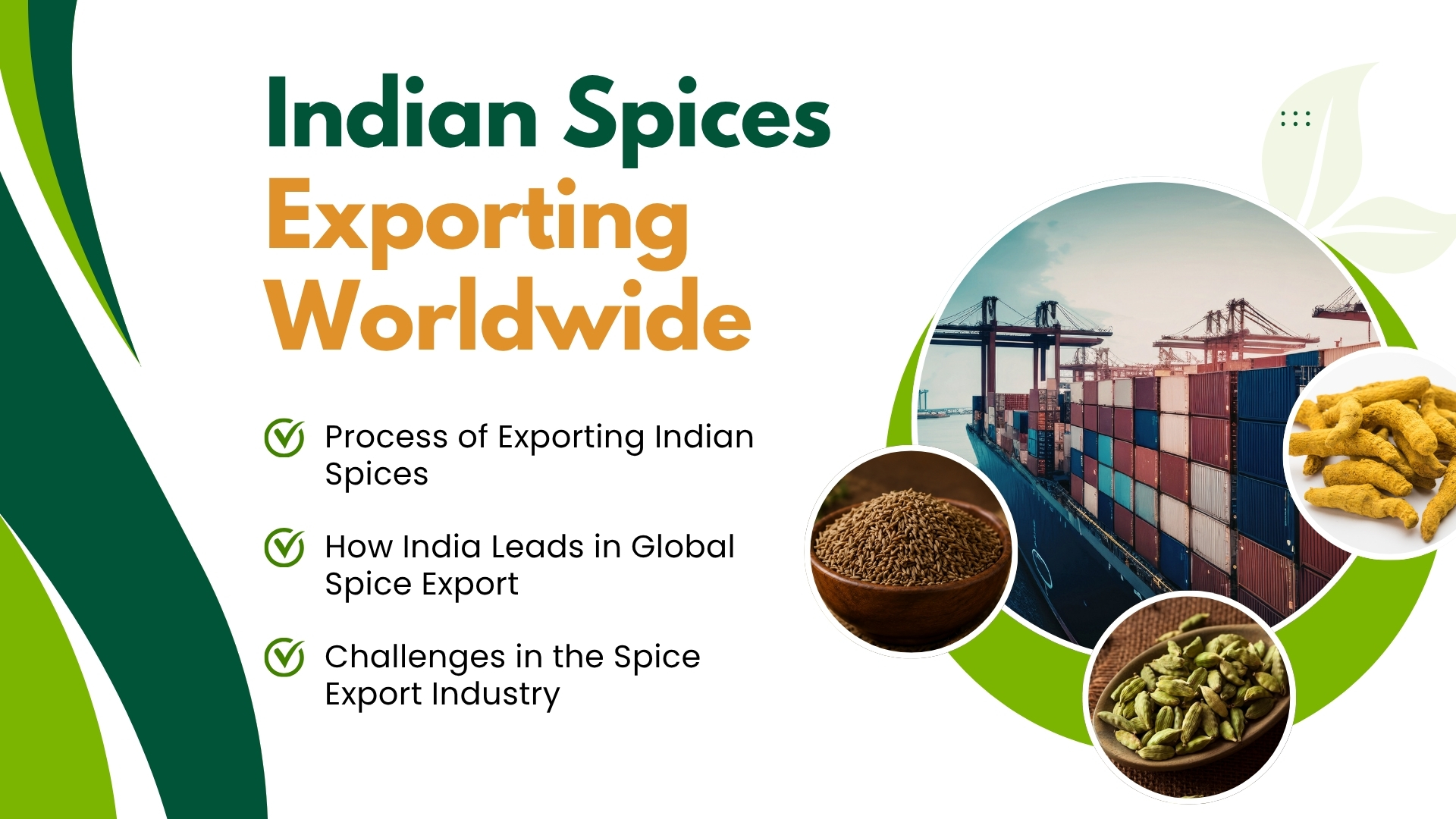
In this blog, you will understand the legacy of Indian spices, the process of exporting spices, challenges, and more. So, let’s dive in!
The Legacy of Indian Spices
Indian spices kinda shaped global trade and cooking for centuries. Earlier, merchants would travel long distances just to reach India’s spice stalls, so spices became one of the first commodities traded around the world.
Key highlights of India’s spice legacy:
- Spices were once seen as valuable as gold
- India sat right at the center of bigger trade routes like the Spice Route, not just nearby
- Cultural exchange moved Indian flavors around the globe, like a ripple effect
- There’s still that strong historical reputation as a trusted spices exporter, even now
Nowadays, that same legacy continues with consistent quality and a strong global appetite.
Understanding India’s Spice Diversity
India produces various kinds of spices, making it a global leader in spice production. The different types of spices in India cater to diverse culinary and medicinal needs.
Common Types of Indian Spices
| Category | Examples | Uses |
| Whole Spices | Cloves, Cardamom, Cinnamon | Flavoring, tempering |
| Ground Spices | Turmeric, Chili Powder | Cooking, seasoning |
| Seeds | Cumin, Coriander | Spice blends, digestion aid |
| Blends | Garam Masala, Curry Powder | Ready-to-use flavor mixes |
Why This Matters:
- Meets global taste preferences
- Supports multiple industries (food, pharma, cosmetics)
- Strengthens India’s export potential
The Spice States of India
India’s geography adds important value to the spice quality. Kerala, the spice state of India is popular for producing exceptional quality spices.
Major Spice-Producing States
- Kerala: Black pepper, cardamom
- Rajasthan: Cumin, coriander
- Gujarat: Fennel, sesame seeds
- Tamil Nadu: Turmeric, cloves
Climate, soil, and rainfall directly affect spice aroma and oil content, which are key quality indicators in global markets.
How India Leads in Global Spice Export
India is one of the top exporters of spices globally. The Indian spices export sector keeps growing, because of rising demand and pretty strong supply chains, basically yes.
Top importers of Indian spices
- United States
- United Arab Emirates
- United Kingdom
- Germany
Why does India dominate so much?
India dominates the export of spices as it:
- Offers a wide range of spices
- Provides cost-effective pricing
- Has active government support
- Has a well-built export infrastructure
Process of Exporting Indian Spices
The export of Indian spices goes through a clear but still detailed process, meant to keep the quality right, the safety handled properly, and the whole thing aligned with what global buyers expect.
Step-by-step export process
- Sourcing: Spices are obtained from well-known farmers who keep to correct cultivation routines
- Cleaning and processing: Impurities are removed, like dust, stones, and other unwanted bits and pieces
- Quality testing: Moisture content is checked, plus purity and safety, following the international rules
- Packaging: Hygienic packing is used so the freshness stays, and contamination is prevented
- Documentation: Export licenses, certifications, and approvals are prepared for an easier flow in trade
- Shipping: Delivery is done on time using efficient global logistics and networks
How to Build Trust Factor among Importers?
- Exporters follow firm standards such as ISO and HACCP.
- This helps ensure product safety, consistency, and overall global quality compliance.
- It also creates a long-lasting trust with international buyers, so repeat orders are more likely.
Understanding Trade and Compliance
Exporting spices needs the right documents, plus proper classification too, like really. The hsn code for spices is important because it helps people figure out what exactly the product is, for taxation and for customs checks.
Why HSN Codes for Spices Matter
- Smooth customs clearance: When customs teams can spot the spice items quickly, it reduces waiting time and helps speed up clearance during international shipping inspections at ports.
- Correct taxation, no confusion: By placing spices into the right categories, the tax is calculated properly, so exporters avoid penalties, misclassification trouble, and those annoying extra costs that can happen during trade.
- A standardized worldwide system: HSN codes make a consistent method that is used across many countries, so it is easier for nations to interpret product types and keep trade practices aligned internationally.
Common Requirements
- FSSAI certification: This one matters because it shows spices meet food safety rules in India, basically confirming they are safe, hygienic, and fit for consumption before export, even if buyers are overseas.
- Export license: An official export license allows companies to handle spices legally for international trade, and it also keeps them aligned with government rules so they do not face legal issues during cross-border deals.
- Quality certifications: Things like ISO and HACCP indicate spices follow global quality expectations, which builds buyer trust and helps product acceptance in competitive foreign markets.
- Country-specific approvals: Since each importing country has its own rules, exporters must secure the needed permissions to meet local requirements, which supports easier entry and acceptance in that destination market.
Rise of Organic and Sustainable Spices
The demand for natural products has grown quite a bit, and that kinda drives the growth of organic spices exporters too.
Benefits of Organic Spices
- No harmful chemicals: Organic spices are produced without synthetic pesticides, so consumption stays safer globally
- Better for health: They keep natural nutrients and antioxidants, which help digestion in a more supportive way, and also overall health
- Environmentally sustainable: Organic farming helps maintain soil health, lowers pollution levels, and supports long-term agricultural sustainability
- Strong demand in premium markets: Organic spices are often chosen in high-end markets, mainly because of quality and purity
Challenges in the Spice Export Industry
Even though there are ample opportunities available, they come with certain challenges. Let’s discuss the challenges in the spice export industry in brief:
- Due to changes in the demand and supply, prices can fluctuate drastically in the spices import export.
- Inadequate climate and weather conditions can affect crop production, ultimately resulting in a disturbance in the supply of spices.
- Consistency in quality is another challenge as the crop is affected by weather conditions. Thus, consistency in quality can be hampered.
- Due to variations in the mediums of export, high transport and logistics costs also affect exports, causing hindrance in exporting spices.
Choosing the Right Spice Export Partner
Choosing the right exporter matters a lot for international buyers, honestly it can make or break a deal, so it’s good to be careful. The best spice exporter in India typically delivers reliability, steady quality, and proper compliance.
Certifications and licenses:
Make sure the exporter actually has active certifications, such as ISO and HACCP, along with the right export licenses. This shows they follow global quality rules and also the legal side of trade.
Experience in global trade:
An exporter with real experience in overseas markets usually understands different regulations, buyer expectations, and the practical rhythm of shipments, which means transactions feel smoother, risks drop, and long-term reliability is easier to maintain.
Quality assurance processes:
Look for solid quality control at every step, from sourcing to packing, because consistent product safety and standards really depend on how they manage each stage. This kind of care also builds credibility with overseas buyers.
Transparent pricing:
Clear, upfront pricing without sneaky extras or hidden fees helps buyers estimate budgets properly, support smarter financial choices, and keep trust strong over time.
Strong logistics network:
Efficient logistics and supply chain handling are key so deliveries arrive on schedule, spices are managed properly, and the chance of damage during international transit stays low.
| Factor | Good Exporter | Poor Exporter |
| Quality | Consistent | Irregular |
| Certification | Verified | Missing |
| Delivery | On-time | Delayed |
| Communication | Clear | Unresponsive |
Conclusion
Indian spices still pretty much lead global markets because the quality is unmatched, the range is wide, and the authenticity feels real. From time-honored cultivation methods to current export pathways, India has built a strong name around the world, you know.
And as worldwide buyers keep asking for tastier yet healthier ingredients, Indian spices are likely to stay a real anchor in international cooking and in trade too.
Partner with a reliable Indian spice exporter like D and S International, so you can get high-quality spices that meet global standards and add flavor to your kitchen, irrespective of your location.