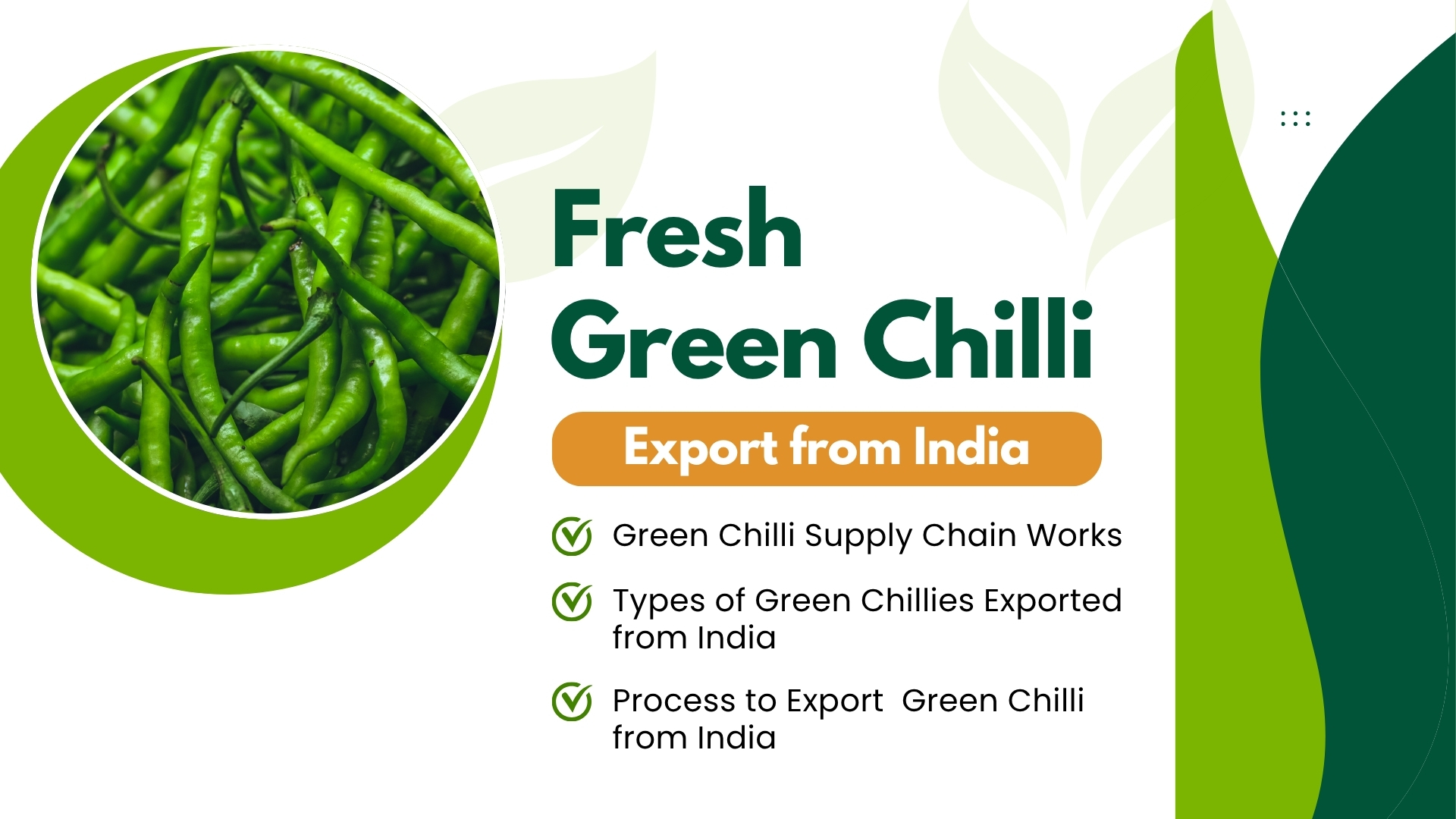
India is a leading producer of green chilli, with growing demand from markets like the United Arab Emirates, Saudi Arabia and Iran. Fresh green chilli exports are becoming a reliable opportunity for Indian farmers, suppliers and international buyers seeking consistent quality. With the right sourcing, handling and export support, this demand can translate into long-term business growth. D&S International enables this by connecting verified suppliers with global buyers through a smooth and transparent export process.
Fresh Green Chilli Export from India: How the Supply Chain Works
Green chilli export is reliant on the effectiveness of the farm-to-delivery supply chain. The global green chilli export market has a high degree of consistency in quality, improved prices, and repeat business in a well-organised process.
1. Farmers and Local Mandis Sourcing
Fresh hari is sourced from farmers and trusted mandi channels. At this level, the emphasis is on picking the appropriate varieties of green chillies, including G4, Jwala and Bullet that are suitable to export.
2. Sorting and Grading
The chilli green harvested produce is thoroughly sorted in terms of size, colour and pungency. The grade of spicy green chilli exported is only of premium grade, and the lower grade is filtered out for domestic markets.
3. Cleaning and Packaging
Ventilated, export-grade materials are used to clean and pack selected produce. Green chilli wholesale shipments should be properly packaged to avoid damage and preserve freshness through the shipping process.
4. Cold Chain and Storage
The chillies are kept and transported at controlled temperatures to maintain quality. This is a step that directly influences shelf life and is an important step towards the successful export of green chilli in India.
5. Dispatch and International Delivery
Upon filling and wrapping, the consignments are sent to the international markets where the export of chilli of Indian origin is in high demand. On-time delivery and consistency assist in developing a long-term association with purchasers.
An efficient supply chain is not only beneficial in streamlining the supply chain, but it also provides a reliable quality and smooth flow in the growing global market for exporting green chilli.
Why Indian Green Chilli is in High Demand in Global Markets
India is increasing its demand for green chilli due to its ability to offer a solution to its consumers, namely, a steady supply with a reliable quality.
Local production in most of the countries is either seasonal or intermittent. That gap is filled by Indian green chilli, which has constant availability, which is essential to wholesalers and retailers who cannot afford the interruption of stock.
The other cause is transit performance. Indian export-grade chilli green retains its colour, texture and freshness more, directly affecting resale in the foreign markets.
In the trade front, India is a country of great variety in terms of the varieties of green chillies, and buyers can select their demand as per their market needs, rather than changing their demand in line with their supply.
This is what makes the green chilli export from India robust in the global chilli export from India market due to this combination of reliability, shelf stability and flexible sourcing.
Types of Green Chillies Exported from India
Different green chilli varieties are exported based on buyer preference, usage and market demand. Selecting the right types of green chillies helps improve acceptance and pricing in international markets.
| Variety | Heat Level | Key Feature | Best Use |
|---|---|---|---|
|
G4 |
Medium |
Thick skin, longer shelf life |
Bulk export |
|
Jwala |
High |
Strong pungency |
Spicy food markets |
|
Bullet |
Medium |
Uniform size, good appearance |
Retail packaging |
G4 is widely used in green chilli export from India due to its durability in transit, while Jwala caters to markets that prefer high pungency. Bullet chilli is often chosen for premium presentation in green chilli wholesale supply.
Choosing the right variety based on demand ensures better consistency and stronger positioning in the global chilli export from India market.
Global Market for Green Chillies: Top Importing Countries
India exports fresh green chilli to high-demand markets like the United Arab Emirates, Saudi Arabia and Iran, where consistent consumption and limited local production keep demand strong year-round. For both suppliers and buyers, this creates a stable and scalable opportunity in the global market for green chillies.
| Country | Demand Level | Preferred Variety | Price Range (Import) | Market Notes |
|---|---|---|---|---|
|
UAE |
Very High |
G4, Bullet |
Medium to High |
Strong retail + re-export hub |
|
Saudi Arabia |
High |
Jwala, G4 |
Medium |
Consistent bulk demand |
|
Iran |
High |
Jwala |
Medium |
Preference for high pungency |
|
Oman |
Medium |
G4 |
Medium |
Stable but smaller volume |
|
Qatar |
Medium |
Bullet |
High |
Premium retail-focused |
What Drives Demand in These Markets
The tendency to demand green chilli in these areas is not arbitrary; it is determined by the definite purchasing tendencies:
- Consumption-based economies: The UAE and Saudi Arabia countries are characterised by high consumption levels in domestic, restaurant, and food service markets.
- Low local production: The extreme climatic conditions lessen local production, making the country more dependent on imports.
- Preference-based sourcing: Certain markets are attracted to visually appealing chilli green, whereas others are attracted to pungency and taste.
- Stable supply need: Importers seek partners that supply volumes in a non-fluctuating manner.
What That Implicates Suppliers and Buyers
To Indian farmers and traders, knowing these trends will help them decide on the types of green chillies to grow and how to supply them when there is demand in the market. In the case of international buyers, international green chilli sourcing is managed through a systematic network of green chilli export operations in India, which guarantees quality, reliability, competitive price of green chilli and volumes.
It is this congruence of demand and supply that has so far bolstered the standing of India in the international market of chilli exportation out of India.
Step-by-Step Process to Export Fresh Green Chilli from India
Exporting green chilli from India is a structured process where each step directly impacts quality, pricing and delivery timelines. A clear system ensures smooth green chilli export from India without delays or rejections.
1. Sourcing and Procurement
Fresh hari mirch is sourced from farmers and mandi networks based on size, colour, and export quality. Choosing the right types of green chillies is important at this stage.
2. Sorting and Quality Check
The chilli green produce is graded to remove damaged or low-quality stock. Only export-grade spicy green chilli moves forward.
3. Registration and Compliance
Exporters must have an IEC code and complete the required registrations. Proper compliance ensures smooth chilli export from India without legal issues.
4. Packaging and Pre-Cooling
The produce is packed in ventilated crates and pre-cooled to maintain freshness. This step is critical for maintaining shelf life during transit.
5. Documentation and Clearance
Key documents like invoice, packing list and phytosanitary certificate are prepared for customs clearance and international shipping.
6. Shipping and Delivery
The shipment is dispatched under controlled conditions to maintain quality until it reaches the buyer.
A well-managed process reduces risk, maintains consistent green chilli price realisation, and ensures long-term success in the export business.
Green Chilli Export Price and Profit Margins
Pricing in green chilli export depends on quality, timing and demand. The green chilli price in India changes daily based on mandi supply, so early sourcing often gives better rates.
What Impacts Export Price
- Quality: Uniform chilli green gets premium pricing
- Market: Demand in export countries affects rates
- Logistics: Air shipments cost more than sea shipments
- Volume: Bulk reduces per kg cost
Where Profit Comes From
Profit in green chilli export from India comes from efficient sourcing, low wastage and selecting the right types of green chillies for each market, not just price difference. Consistency in quality and supply is key to sustaining margins in the global chilli export from India business.
Green Chilli HS Code and Export Documentation
To export green chilli, it is necessary to classify and document it in a proper manner. The HS code of green chilli traded internationally belongs mostly to the category of fresh vegetables (HS Code: 0709), which is mandatory for import and export customs clearance and shipping.
Key Documents Required
- Commercial Invoice
- Packing List
- Phytosanitary Certificate
- Certificate of Origin
- Bill of Lading / Airway Bill
All the documents will help to ensure that the export of green chilli in India meets the international standards of quality and safety. Any minor mistakes in the documentation may cause delays or rejection at the destination.
To the suppliers and buyers, the right paperwork will guarantee that the market will clear faster, transactions will be carried out smoothly and reliably in the global chilli export business in India.
Packaging and Cold Chain Requirements for Fresh Green Chilli Export
Maintaining freshness is critical in green chilli export, as even small handling mistakes can reduce shelf life and market value. Proper packaging and temperature control ensure that the chilli green reaches buyers in the same condition as it was sourced.
Packaging Standards
- Use ventilated crates or corrugated boxes
- Avoid overfilling to prevent damage
- Maintain uniform grading in each pack
- Use liners if required to retain moisture
Cold Chain Management
- Pre-cooling immediately after packing
- Storage at controlled temperature (usually 7–10°C)
- Maintain airflow to avoid condensation
- Minimise handling delays before dispatch
For green chilli wholesale shipments, consistency in packaging directly impacts buyer trust and repeat orders. A stable cold chain not only preserves quality but also helps achieve better green chilli export prices in international markets.
Is Green Chilli Export Profitable for Indian Farmers and Traders?
Yes, green chilli export can be profitable, but only when sourcing, quality and market timing are handled correctly. Unlike local sales, green chilli export from India offers access to better pricing, especially for export-grade produce.
What Drives Profit
- Higher rates for premium chilli green quality
- Bulk demand in international markets
- Better price realisation compared to local mandis
Where Margins Are Lost
- Poor sorting leading to rejection
- Delays affecting freshness
- Incorrect pricing or market mismatch
Real Profit Perspective
Profit is not fixed per kg. It depends on how efficiently the supply chain is managed and how well the right types of green chillies are matched to the right market.
For farmers and suppliers, working within a structured chilli export from India system improves consistency, reduces risk and helps build long-term, profitable trade relationships.
Conclusion
Green chilli export opportunity is also increasing continuously owing to high demand, good supply and improved price realisation in foreign markets. It provides access to higher-value markets to Indian farmers and suppliers and provides global buyers with reliable sourcing of quality produce. The secret of success is the selection of the appropriate varieties, their quality control and co-operation with the well-organised export process.
D&S International makes this journey easier by linking trusted suppliers with international purchasers, and end-to-end sourcing, quality and logistics.
As a farmer or supplier to export, or a buyer seeking a stable supply of green chilli, contact D&S International and establish a lasting and stable business relationship.
FAQs
Is green chilli good for health?
Yes, green chilli does contain vitamin C, antioxidants and capsaicin that could promote immunity, metabolism and digestion in moderate amounts.
Who is the biggest exporter of chillies?
India is also a major exporter of chillies in the world, with a supply of both dry and fresh chillies to the Asian, Middle East and European markets.
What is the export duty of green chilli?
Indian fresh green chilli export is usually subjected to zero export duty, but the exporters have to meet the documentation and quality regulations.
Which green chili export from India?
Variants of green chilli exported by India, such as G4, Jwala and Bullet green chilli, have been chosen depending on pungency and shelf life, as well as the demand for green chilli in foreign markets.
Best green chilli supplier from India?
The most appropriate supplier is one that is quality-based, consistent and able to export. D&S International links trustworthy Indian vendors and international purchasers by facilitating an efficient export procedure.