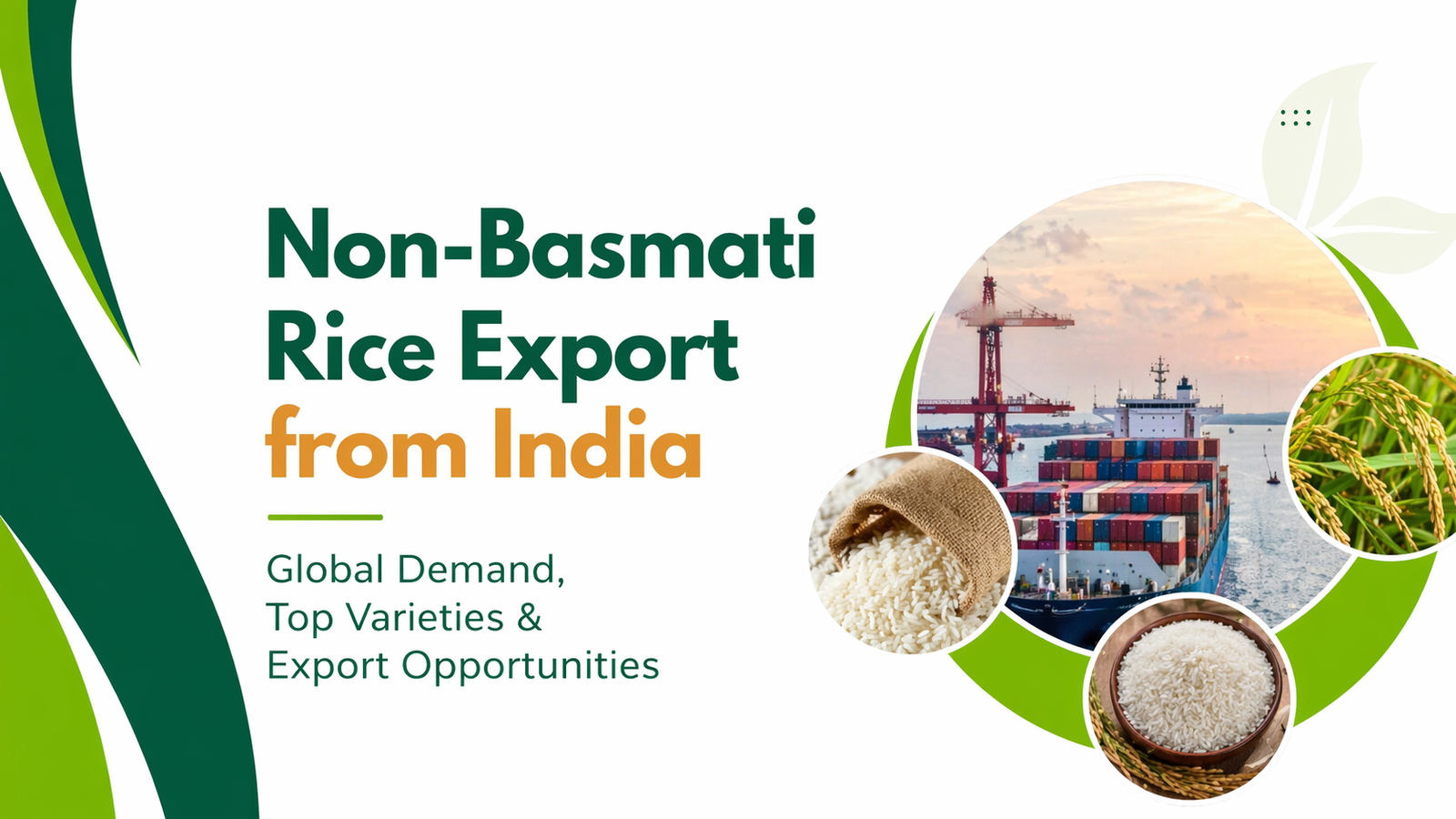
India is a blessed country with adequate weather conditions to grow a wide variety of crops. Among agricultural products, rice is one of the most traded commodities.
Did you know?
India produced approximately 149.07 MT in the financial year 2024-2025.
This has opened export opportunities for Indian farmers, helping to build a strong global presence, and it is also known as the biggest rice exporter in the world. For example, the UAE imported approximately $487.88 million worth of rice in 2024 from India.
Moreover, India supplies both basmati and non-basmati rice in bulk to countries like the UAE. This is because it is affordable, widely consumed, and exported in large quantities across continents.
For anyone to become a non-Basmati rice exporter, understanding how the system works is important. So, in this blog, you will understand sourcing, pricing, policies, and more involved in creating a successful export business. Let’s dive in!
What Makes Non-Basmati Rice Different from Basmati Rice?
There is no such prominent difference that rice has in terms of its taste. However, it is classified according to its price, grain size, and usage. Let’s understand it in brief:
Basmati rice appears to be long in shape, aromatic, and is considered premium. The basmati rice price 1 kg is comparatively higher than that of the other varieties of rice.
Whereas non-basmati rice is shorter in appearance and more affordable. It is usually used in daily meals, making it more practical for large-scale consumption.
India yields various types of rice that fall in this category, like IR64, Sona Masoori, and Pooni. These are some of the types that are popular for their availability and ease of cooking.
Feature | Basmati Rice | Non-Basmati Rice |
Grain Length | Long | Short/Medium |
Price | High | Low |
Aroma | Strong | Mild |
Usage | Premium dishes | Daily meals |
Demand | Niche | Mass market |
FAQs
Why did India ban rice export?
In July 2023, India banned non-basmati white rice exports to secure the domestic supply and manage rising prices.
How to export non-basmati rice from India?
Exporting non-basmati rice from India needs IEC, APEDA, and FSSAI licenses, plus Phytosanitary and RCAC certificates. Follow export rules, including MEP and duties, for legal, smooth shipments.
India exports rice to which countries?
The major countries India exports rice to are Saudi Arabia, Iraq, Benin, Iran, and the United Arab Emirates (UAE).
What is the primary factor affecting the rice price in India?
Rice prices in India are influenced by the monsoon and MSP (Minimum Support Price).
Why is India Leading in Rice Export Globally?
Here are a few reasons that explain why India is leading in rice export globally. Let’s dive in:
Production
Due to favorable climate conditions and farming practices, Idia grows large quantities of rice.
Pricing
The price of rice grown in India is affordable compared to the other top rice-exporting countries dealing in mass export.
Strong System
India’s strong rice export system, supported by infrastructure and trade networks, helps exporters connect with international markets and fulfill large orders efficiently.
This balance of price, supply, and demand makes India a preferred choice for many importing countries
Is There Any Rice Export Ban in India?
This is one of the frequently asked questions new exporters ask. So let’s understand it in brief:
Many times, the government applies a rice export ban or restricts certain varieties. This is usually done to control domestic prices and ensure food security within the country.
Such decisions can affect the rice export business directly. As a result of this, shipments might be delayed, or contracts may require adjustments.
Thus, exporters should be updated about the government announcements and policy changes to avoid sudden losses and maintain smooth operations.
How can someone start a rice export business?
There are a few steps to be followed to start a rice export business. Let’s discuss them in brief:
- Apply for an Import Export Code (IEC). It is the basic requirement for any export activity.
- Register your business with APEDA, as it is mandatory for agricultural exports. After the paperwork is completed, focus on finding a reliable rice supplier.
- Selecting the right supplier is vital as quality, consistency, and delivery timelines depend on this decision. A strong supplier helps in building trust with international buyers.
- Once the sourcing is sorted, exporters can connect with buyers and create their presence in the global market.
Document | Purpose |
IEC | Allows export business |
APEDA Registration | Mandatory for agri export |
FSSAI License | Food safety compliance |
Phytosanitary Certificate | Confirms pest-free shipment |
RCAC | Required for specific exports |
Where Do Exporters Source Rice From?
Most exporters depend on bulk sourcing rather than direct farming. This is where wholesale rice suppliers play a key role.
These suppliers operate in large markets and provide rice in bulk quantities at competitive prices. Working with them ensures a steady supply and better margins.
In many cases, exporters also connect with a wholesale rice dealer who helps manage sourcing and logistics. This is especially useful for those who are new to the business.
There is also a growing segment of organic rice suppliers catering to niche markets. These suppliers focus on quality and certification, attracting premium buyers.
Overall, the rice wholesale network in India is well-developed and offers multiple sourcing options.
How Much Does Rice Cost in Wholesale and Export?
There are several factors that need to be considered to decide the pricing for the rice export business. These include:
- Quality
- Demand
- Logistics
However, the 25kg rice wholesale price can vary depending on the type of rice and the region it is produced in. One should remember that export pricing is not limited to the base cost, it also involves packaging, transportation, and freight costs.
Type of Rice | Wholesale Level | Export Demand | Common Markets |
IR64 | Low | High | Africa, Asia |
Sona Masoori | Medium | Stable | UAE, Sri Lanka |
Ponni | Medium-High | Growing | Middle East |
What is GST on Rice Trading?
Another important thing an exporter should consider is taxation. In India, goods and services tax is levied on all kinds of products, and the same is the case with rice. So, the GST on rice trading depends on how the product is sold.
Usually, GST is not charged on loose rice, while packaged rice can be counted under taxable goods. This can impact the pricing and margins.
Exporters should maintain an organized record and follow compliance rules carefully. A minute mistake in handling tax documents can lead to difficulties during shipment and audits.
Where Does India Export Rice To?
India exports rice to many countries, among them is the UAE as well.
There are international rice buyers who distribute their purchase in bulk quantities in the UAE. The main focus of such buyers is on price, quantity, and consistency.
In contrast, rice buyers in India also work in the wholesale markets and redistribution channels, maintaining a smooth export process of rice.
Moreover, the rice suppliers in UAE facilitate the supply of rice across local markets and retailers.
Knowing these buyer categories helps suppliers to create better plans and targets to reach the right markets.
How to Find Indian Rice Exporters?
To grow your business and network better, it is important to have a reliable exporters list. It will help you find suppliers that are credible and offer quality rice grains. To find these lists, you can go through:
- Councils
- Trade Directories
- Online B2B Platforms
However, obtaining a list is not enough. One should carefully go through the details of the export, verify their identities, look for certifications that the business shall have for export, and legal documents as well.
Once you are satisfied with the information shared by the rice supplier, then only enter into any agreement.
Moreover, verifying certifications, past performance, and delivery reliability is vital. A verified network lowers risks and increases long-term stability.
Problems Faced By Indian Rice Suppliers
There are some problems that a supplier faces while exporting rice abroad. Let’s discuss them in detail:
Uncertainity
Like any other business, rice export also faces uncertainty. For example, goverment announcing a ban on rice exports.
Price Fluctuation
There are possibilities of price fluctuations that can affect the profitability of rice export.
Logistics Problem
This is another basic issue that includes delays in delivery and high freight costs that lead to added complexity.
Payment security
Dealing with new international buyers without proper safeguards can lead to financial losses.
How to Build Long-Term International Trade Relations
Success in this industry depends on consistency and trust. The reliable non-basmati rice exporter maintains quality standards while developing long-term relationships with customers.
The supply chain remains stable when businesses partner with reliable wholesale rice suppliers. The establishment of long-term partnerships depends on effective communication and punctual delivery.
Global markets recognize exporters who maintain reliable operations while creating value for their customers.
Conclusion
The demand for non-basmati rice exports continues to grow, making it a strong opportunity for businesses in India. The country has become the largest rice exporter worldwide because of its extensive production capabilities and international distribution network.
Success for new entrants depends on their ability to master all aspects of their operations, which include sourcing materials, setting prices, complying with regulations, and understanding customer buying patterns.
Non-Basmati rice export success requires businesses to establish sustainable operations that create dependable product quality throughout their entire existence.
Grow your rice business with D and S International. They help you obtain good quality rice, fair prices, and easy export support. Moreover, they work with trusted buyers, so wait no more, start selling in global markets today.