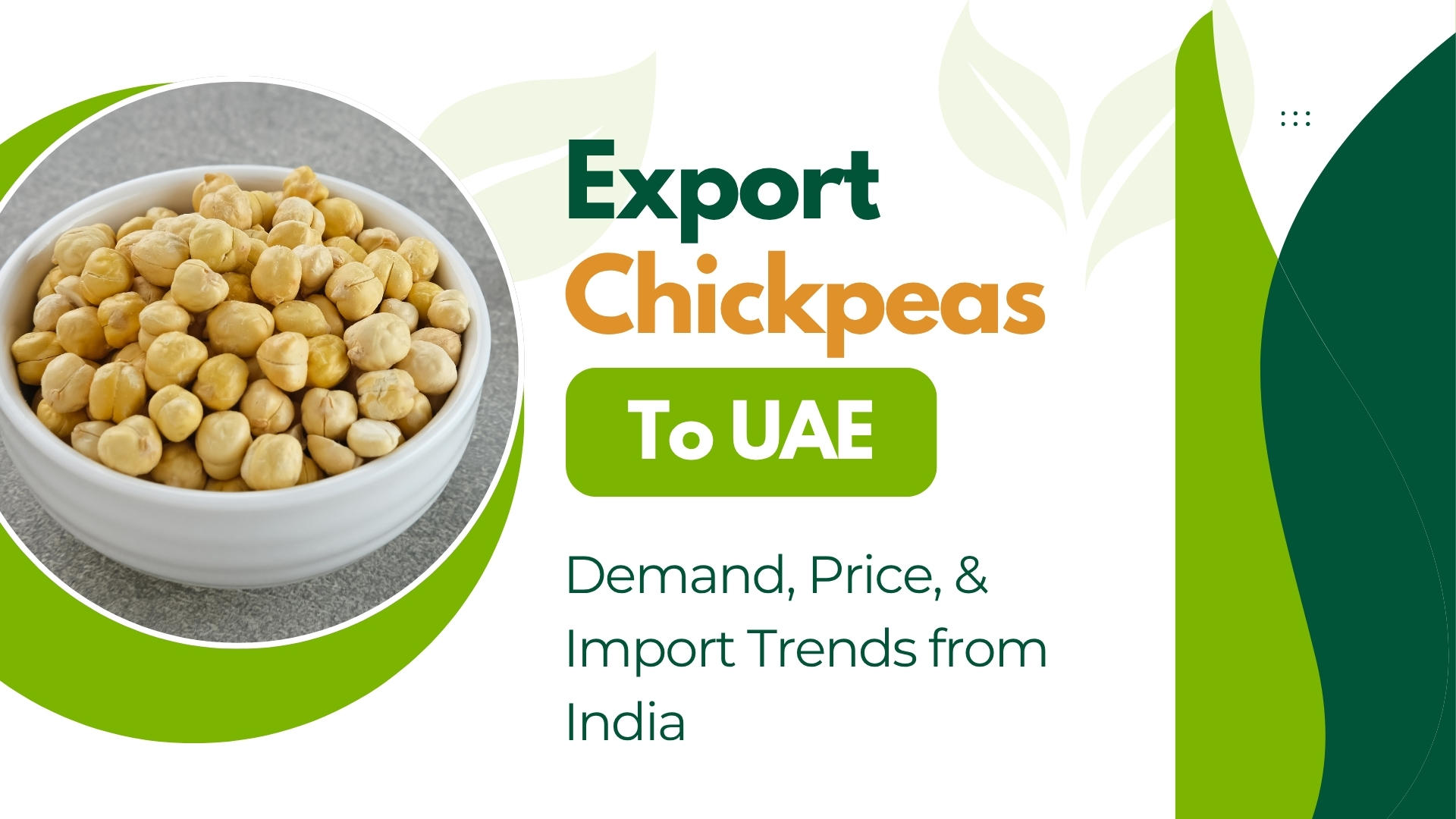
India, the land blessed with a suitable climate and temperatures for growing pulses, is the world’s largest producer of chickpeas. Additionally, India produces varieties of chickpeas, like desi, kabuli, white chana, wild, and black chana, and wild, making it a top exporter as well.
India exports chickpeas globally, but the Middle East, especially the UAE, is the key buyer of chickpeas. In the year 2024-25, India exported chickpea valued at approximately USD 35.27 million to the UAE.
In the UAE, chickpeas are always in demand as they relish the deep-rooted Arab culinary cuisines, where chickpeas are used in the preparation of hummus and falafel. Thus, India supplies huge amounts of chickpea to the UAE.
In this guide, you will understand the growing demand for chickpeas, their types, how to export, and more. So, let’s dive in.
Understanding Chickpeas and Their Global Presence
Chickpeas are small, round pulses that are rich in fiber, vitamins, and minerals, making them an important part of a balanced diet. Many countries import chickpeas due to their affordability, nutritional value, and easy to store. Thus, chickpea export to UAE is so popular.
Moreover, chickpeas are available in different types in the global market, serving different purposes. Here are the most common varieties:
- White chickpeas
- Black chickpeas (also known as brown chana)
- Kabuli chana
These are widely consumed in Asian and Middle Eastern countries, often referred to as channa in local markets and cuisines.
Apart from this, there is another category called organic chickpeas that are produced without the use of any harmful chemicals. These qualities make organic chickpeas popular among health-conscious customers.
FAQs
Who is the biggest exporter of chickpeas?
India is the world’s largest exporter of chickpeas.
What is the most exported product from India to UAE?
Pulses, spices, fruits, vegetables, gold, textiles, etc., are the most exported products from India to UAE.
Which country imports chickpeas from India?
Iran, Turkey, the UAE, Algeria, and Bangladesh are major importers of Indian chickpeas.
What is the UAE's biggest export?
The UAE’s biggest export is crude petroleum, along with petroleum gas and refined petroleum products.
Types of Chickpeas
However, there are two main types of chickpeas traded internationally, namely:
- Kabuli Chana
These are larger and lighter in color, usually used in the preparation of hummus and salads.
- Desi Chana
They are smaller and darker in appearance, and are usually used in traditional cooking and flour production.
Chickpea Demand in the UAE Market
The UAE in the Middle East imports huge quantities of chickpeas as its local agricultural production is limited due to the desert climate and water scarcity. This makes the country dependent on imports to meet its food demand.
The chickpeas wholesale Dubai market plays an important role in supplying bulk quantities to retailers, supermarkets, and food processing companies. Many hotels and food businesses require a steady supply of chickpeas to maintain their operations, which creates consistent demand throughout the year.
Major Buyers and Import Channels
The chickpea market in the UAE is backed by a strong network of importers, distributors, and wholesalers. Many Indian chickpea suppliers in the UAE work with importers and wholesalers to offer consistent quality and timely shipments. Trade partnerships between exporters and UAE buyers are often built on trust, quality assurance, and long-term contracts.
India’s Role in Chickpea Export to the UAE
India is a leading global producer of chickpeas, benefiting from a strong agricultural base and a favorable climate. Its substantial crop meets both domestic and international demand, allowing for competitive exports, especially to markets like the UAE.
Indian exporters prioritize grading, packaging, and quality control to comply with global standards. Government support and modern farming methods have further boosted India’s standing in the pulses market, making it a trusted partner for UAE buyers seeking reliable sourcing solutions.
Key Export Varieties
Moreover, India exports a variety of chickpeas depending on the international demand and market needs. One of the most famous export products, kabuli chana and desi chana, comes from chickpea exporters in India, supplying premium quality chickpeas in the UAE.
The availability of multiple varieties gives UAE buyers flexibility in choosing products that match their price range and consumer demand, making India a versatile supplier in the global chickpeas trade.
Chickpea Price and Market Trends
The prices of chickpea in India and the UAE change according to supply, demand, and seasonal production. Let’s understand the pricing in brief:
- Prices generally get lower after the harvest season as the supply is high.
- During off-season months, prices rise due to limited availability and higher storage and logistics costs.
- Chickpea prices also depend on quality, size, and variety.
Moreover, market trends make us understand that chickpea is a stable commodity as they are a regularly consumed food product with consistent demand in the UAE.
Factors Affecting Chickpea Prices
There are many factors that influence chickpea prices in the global market. Let’s understand them quickly:
- Weather plays a major role because poor rainfall or crop damage can reduce production and increase prices.
- Government policies, export regulations, and international trade conditions also affect pricing and supply.
- Transportation and freight costs are another key factor. When fuel prices increase, shipping costs rise, which directly impacts the final price in importing countries like the UAE.
- Demand from food industries, wholesalers, and retailers also creates price fluctuations in the market.
- Global supply chain stability and trade agreements between countries help maintain balanced prices and steady availability.
How the Chickpeas Import Export Business Between India and UAE Works
There is a structured process followed by the chickpea import-export business in India to export its yield. Let’s understand this organized process in brief:
- Exporters first source chickpeas from farmers or agricultural markets and then clean, grade, and package them according to international standards.
- After this, the products are shipped to UAE importers through sea routes, which are cost-effective and reliable.
- Importers in the UAE receive the shipment, clear customs, and distribute the chickpeas to wholesalers, retailers, and food companies.
This process requires coordination between suppliers, logistics companies, and buyers to ensure smooth delivery and product quality.
Moreover, strong communication and proper planning can reduce delays and build trust between Indian exporters and UAE buyers.
Documentation and HS Code
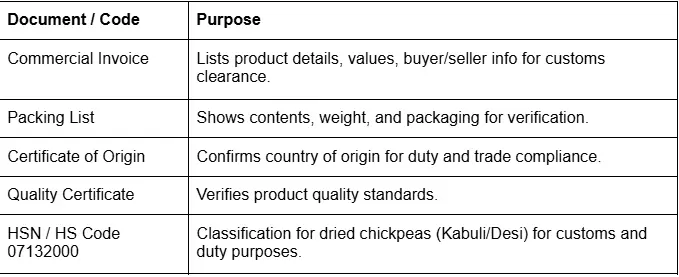
If you are planning to export your produce to the UAE, you need to make sure that you have all the required documents. These documents include:
- Invoices
- Packing Lists
- Certificates of Origin
- Quality Certificate
These documents help customs authorities verify the shipment and ensure legal compliance.
Moreover, chickpeas HSN code and chickpeas HS code are used to categorize the product according to trade regulations. These codes help in finding the product category and impose accurate customs, duties, and taxes.
Thus, following proper documentation and compliance rules helps exporters build credibility and makes the import process easier for UAE buyers.
Role of Certified Exporters and Government Bodies
Government bodies and export certifications play a crucial role in facilitating chickpea exports from India. Among these bodies, one is APEDA, which helps exporters maintain quality standards and meet international trade requirements.
Here is why working with an APEDA-certified exporter is important for UAE buyers:
- Working with an APEDA-registered chickpea exporter ensures that the product follows proper safety and quality guidelines.
- APEDA provides export certifications, promotes agricultural products, and supports exporters in reaching global markets. This builds trust among UAE buyers and promotes long-term business relations.
- Certified exporters also follow proper packaging, hygiene, and quality control measures, which makes them reliable in international markets.
How to Choose a Trusted Pulses Exporter in India
Choosing the right exporter is important for both quality and business success. Key qualities of trusted pulses exporters in India include:
- Many pulses exporters in India chickpeas focus on maintaining high-quality standards, timely delivery, and competitive pricing.
- Trusted exporters build strong relationships with buyers by providing a consistent supply and clear communication.
- Reliable exporters invest in proper storage, grading, and packaging systems to maintain product quality during transportation
- This reduces the risk of damage or contamination and ensures that buyers receive fresh and clean chickpeas.
- Working with experienced exporters helps UAE buyers avoid supply issues and ensures smooth trade operations in the long run.
Opportunities for Indian Exporters in the UAE Chickpeas Market
The demand for kabuli chana export UAE is increasing due to the growing food and hospitality industry. Many restaurants, hotels, and packaged food companies need a consistent supply of chickpeas on a daily basis. Especially, kabuli chickpeas are popular for their large size and light color.
Many Indian exporters take advantage of this demand by focusing on quality, proper packaging standards, and timely delivery.
With growing demand for healthy and plant-based foods, chickpea exports are expected to grow steadily in the coming years.
How can Bulk Chickpeas Suppliers in India Enter and Grow in the UAE Market?
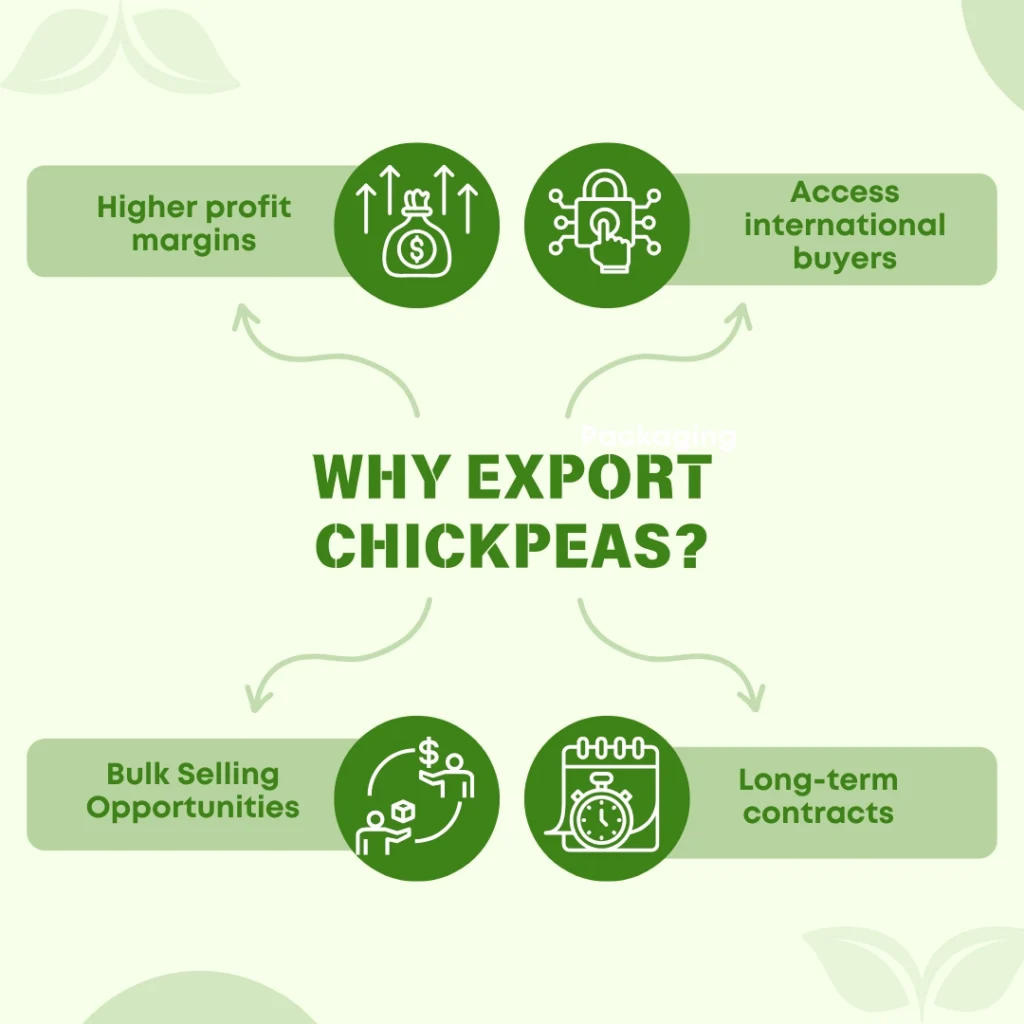
Chickpea export brings a major opportunity for bulk supply. Many UAE buyers like working with bulk chickpeas suppliers India as it reduces cost and ensures a consistent supply. Moreover, bulk trades build long-term contracts with buyers.
Exporters can create a stable income from large-scale supply agreements made with wholesalers and supermarkets.
Private labeling and customized packaging are also becoming popular in the UAE market, allowing exporters to expand their business further.
Benefits of Importing Chickpeas from India
People in the UAE who purchase goods can greatly benefit from importing chickpeas from India. This is because:
- India sells chickpeas at prices that are affordable, and they always have a steady supply.
- India has various types of chickpeas, including Kabuli, Desi, and organic ones, allowing buyers to choose what they need based on their preferences.
- The way to get chickpeas from India to the UAE is short and easy, which means it does not take a lot of time. It is not very expensive to get them there.
- Chickpea exporters in India ensure high quality and flexible quantities, making it easy for buyers in the UAE to do business.
How can UAE buyers build strong and long-term partnerships with Indian chickpea suppliers?
Businesses need to work together for a time if they want to grow. If buyers in the UAE get chickpeas directly from suppliers in India, it can help reduce costs and make it easier for them to talk to each other. If they agree to work together for a time and grow chickpeas just for each other, it can help make sure that the supply of chickpeas is steady and that they are of good quality.
If they regularly check the quality of the chickpeas, make agreements, and are open about prices, it can help build trust between them. Over time, this can lead to lower prices, faster delivery, and stronger relationships between businesses.
When sellers and buyers in India and the UAE work together, it creates a system that is stable and reliable for trading chickpeas.
Wrapping Up
The UAE’s demand for chickpeas continues to grow, driven by expanding food markets, restaurants, and retail chains. India remains a key supplier with its diverse chickpea varieties, reliable logistics, and consistent quality. For UAE buyers and global importers, partnering with a trusted exporter is crucial. D and S International stands out by offering high-quality Kabuli, Desi, and organic chickpeas, ensuring timely delivery and adherence to export standards. With expertise in bulk supply and long-term trade partnerships, D and S International helps buyers build a stable and efficient chickpea sourcing network, supporting growth in the competitive pulses market.