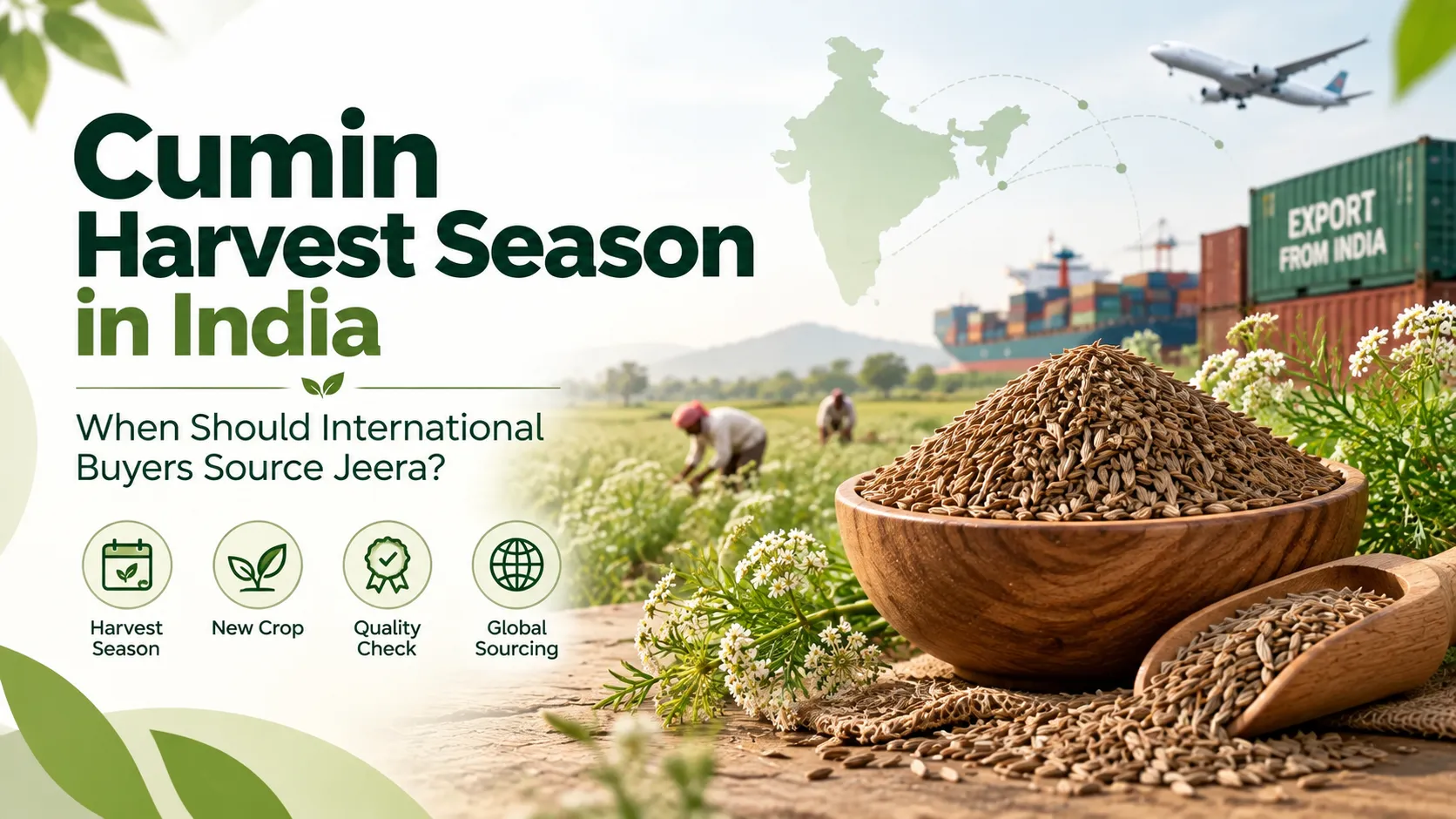
India is one of the world’s best-known sources of cumin seeds, or jeera, and harvest timing matters for both growers and international buyers. For Indian producers who want to sell into export markets, understanding the cumin harvest season in India can help with crop planning, cleaning, storage, pricing discussions, and buyer outreach.
The common cumin Indian name is “jeera.” It is a widely used cumin spice in household cooking, spice blends, food manufacturing, seasonings, and processed foods. Cumin is used across many cuisines, so import demand can come from wholesalers, spice processors, food manufacturers, distributors, and retail brands.
When Is the Cumin Harvest Season in India?
Cumin is mainly grown as a Rabi crop. In major producing regions, sowing generally takes place during October and November, while harvesting begins around February. Fresh new-crop jeera usually starts reaching major markets from March.
A typical cumin crop takes roughly 110–115 days to mature, although actual timing can change with variety, location, temperature, rainfall, irrigation, and other growing conditions.
For producers, this means the important selling period often begins immediately after harvest, when cleaning, grading, testing, storage, and buyer discussions become critical.
Cumin Crop Calendar for Producers and Buyers
A simple sourcing calendar helps both farmers and international buyers understand how the market moves.
| Stage | Typical Period |
|---|---|
| Sowing | October–November |
| Crop development | November–January |
| Harvesting | February onward |
| New crop arrivals | Mainly from March |
| Procurement and trade activity | March onward, depending on stock and demand |
These dates should be treated as a practical guide rather than a fixed rule. Weather and crop conditions can shift arrivals from one season to another.
Why the New-Crop Period Matters for Cumin Producers
When new cumin begins entering mandis, buyers can evaluate larger volumes from the latest crop. Producers may also have more opportunities to discuss specifications with traders, processors, exporters, and bulk buyers.
However, harvest season does not automatically mean that every producer should sell immediately. Price is influenced by crop size, domestic demand, export demand, stock levels, quality, weather, and market expectations.
For farmers looking at cumin export opportunities, quality can be as important as timing. Buyers may ask about moisture, purity, foreign matter, pesticide residue, colour, aroma, volatile oil, cleaning method, and packaging.
Our detailed guide to cumin export from India explains the broader export process, while this article focuses specifically on crop and sourcing timing.
What Should Producers Do Before Selling New-Crop Jeera?
Harvesting is only the first step. Export-oriented cumin must be handled carefully after the crop is mature.
The Spices Board of India recommends harvesting cumin at full maturity and highlights proper drying, cleaning, hygienic handling, and protection from contamination. Producers should also pay close attention to pesticide use because importing countries may check residue levels.
Before approaching a potential exporter or overseas buyer, producers should focus on:
- proper harvesting at maturity;
- clean and uniform drying;
- removal of dust, stones, and foreign material;
- moisture control;
- safe storage away from contamination;
- grading according to buyer requirements; and
- testing where required by the destination market.
For a more detailed preparation checklist, producers can read our guide on how to make cumin seeds export ready.
When Should International Buyers Source Indian Cumin?
For buyers looking for fresh-crop material, March onward is an important period because new-season cumin starts entering trading markets. This can provide more choice across lots, grades, origins, and quality levels.
That does not mean March is always the cheapest month. International buyers should compare current arrivals, quality, crop estimates, freight costs, currency movements, and destination-market demand before booking large quantities.
The right sourcing window also depends on the buyer’s needs. A spice processor may prioritise oil content and consistency, while a retail brand may focus more on cleanliness, appearance, residue compliance, packaging, and uniformity.
For producers, understanding these differences helps them position their crop for the right buyer instead of treating all export enquiries the same.
Gujarat, Rajasthan and the Importance of Unjha
Gujarat and Rajasthan are major cumin-producing regions in India. Unjha in Gujarat is a particularly important trading centre for jeera, where arrivals and trading activity are closely watched by the spice trade.
Producers located near major sourcing and processing centres can benefit from better access to cleaning, grading, storage, testing, traders, and export supply chains.
Those planning to work with international markets should also understand the wider documentation and compliance process. Our guide to APEDA, FSSAI and IEC registration for food exports explains these requirements in simple terms.
Does Harvest Timing Affect Cumin Export Quality?
Yes. Harvesting too early can affect seed maturity and quality, while poor drying or storage can introduce moisture, contamination, or quality loss.
For cumin export from India, producers should think beyond yield alone. Export buyers often want a predictable specification that can be repeated across shipments.
The Spices Board of India’s quality improvement guidance recommends harvesting fully matured cumin, drying it on clean surfaces, cleaning it properly, and avoiding practices that may create contamination or residue problems.
Producers who are new to international spice sales can also review our broader guide on how to export spices from India to understand the full journey from sourcing to export.
Final Thoughts
The cumin harvest season in India gives producers an important window to prepare their crop for domestic and international buyers. Sowing generally takes place in October–November, harvesting starts around February, and fresh jeera begins reaching markets from March.
For Indian cumin producers, the best opportunity is not simply to sell as soon as the crop is harvested. Better results can come from understanding buyer specifications, protecting quality during drying and storage, monitoring market demand, and preparing the cumin spice according to the requirements of the intended destination.
A producer who combines the right harvest timing with proper grading, documentation, testing, and buyer targeting is better positioned to participate in the cumin export market.
FAQ's
Cumin is generally harvested from February onward in major producing regions. Fresh new-crop jeera usually starts arriving in trading markets from March, although weather and local growing conditions can affect the exact timing.
The common cumin Indian name is jeera. It is one of the most widely used spices in Indian cooking and is also an important agricultural commodity for domestic and international markets.
For buyers interested in fresh-crop cumin, March onward is an important sourcing period because new-season supplies begin entering the market. However, the right buying time depends on quality requirements, market arrivals, prices, demand, freight, and available stocks.
Yes. Indian producers can participate in export supply chains directly or through traders, processors, exporters, FPOs, and other sourcing partners. The cumin must meet the buyer’s quality, testing, documentation, packaging, and destination-market requirements.
Not necessarily. Freshness is important, but buyers primarily look for cumin that meets their required specification. Properly cleaned, dried, tested, and stored cumin from an earlier crop can also remain commercially suitable depending on quality and buyer requirements.