A container of cumin can leave Mundra in great condition and arrive in Jebel Ali with bags wet and caked at the bottom of the stack. The seeds were good when they were packed. The packing was the problem.
More often than we’d like, we see this happen. Producers spend months growing a product, and treat packing as the last line on the costing sheet. Buyers don’t. The bag is the first thing they check and typically the first reason to file a claim for them.
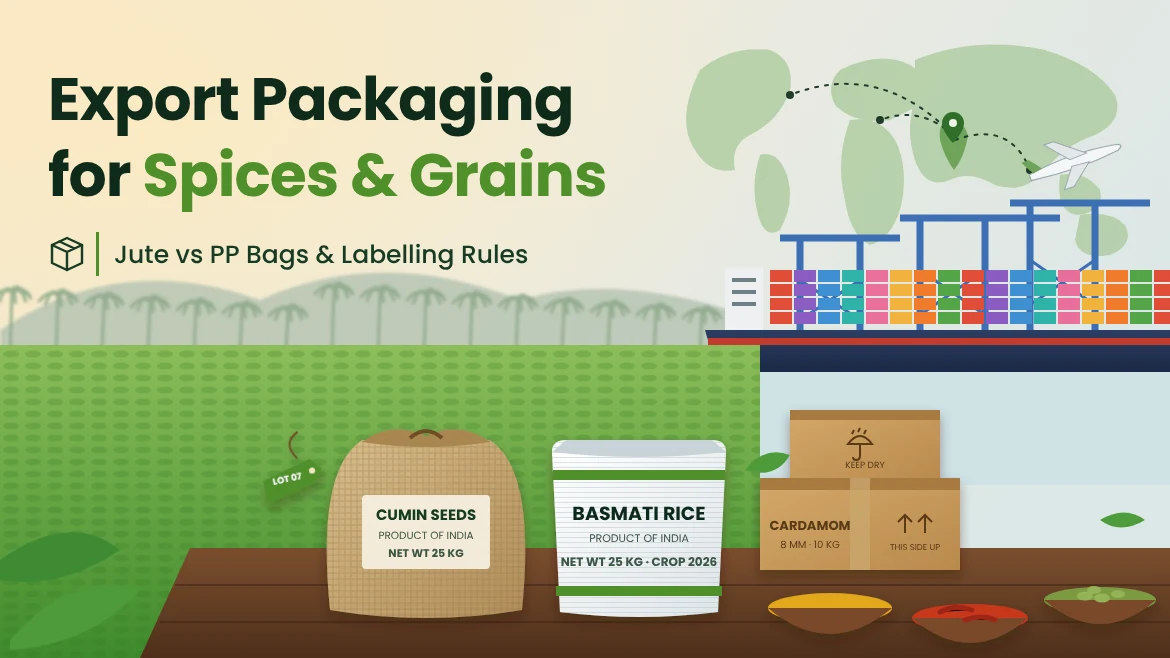
This article takes you through what truly works in export packaging for spices and grains: when jute is the right call and when PP bags make more sense, how to pack each product, what to print on the bag, and how to keep the cargo dry inside the container.
Why Export Packing Differs From Domestic Packing
A sack of rice travelling from Karnal to Delhi spends a day or two in a truck. The same bag heading to Dubai or Dammam will take between three and five weeks between your warehouse and the store of the buyer, counting loading, waiting at port, sea transit, customs and unloading.
During that time it is subjected to things that a household bag seldom is:
- Heat and humidity. Containers heat up throughout the day and cool down at night. Moisture condenses on the ceiling and drips down on the top layer of bags. Shippers call it container rain.
- Stacking load. The bottom bags hold the weight of everything above them for weeks.
- Rough handling. Bags are pulled, hooked and dropped at least twice on the way.
- Inspection. Customs may open and probe bags at either end, and the buyer will check every label against the documents.
A bag that survives all this is doing more than just holding product. It protects your payment.
Jute or PP Woven Bags: Which One to Choose?
When to Use Jute Bags
Jute is a breathable material. The weave allows air to pass through, so produce with a little moisture doesn’t sweat as much. It is sturdy and biodegradable and has a natural look that some buyers like, especially for whole spices and traditional markets.
The drawback is that jute is heavier and costlier than PP. It lets moisture in as easily as it lets moisture out. It might shed fibres into the goods. Ask your supplier for jute bags that are hydrocarbon-free for your food, treated using vegetable oil instead of mineral oil.
When Woven PP Bags Are Preferred
Most of the rice, lentils and cumin from India currently travel in polypropylene (PP) woven bags. They are light, inexpensive and tough to rip. They also print well, which is important if the client wants their own brand on the bag.
PP doesn’t breathe. If product goes in high in moisture, the moisture stays in. That is why a moisture test before packing matters much more with PP than with jute. Laminated PP or BOPP bags provide a glossy printed appearance for shelf packs.
Inner Packs and Liners
Anything that reacts to moisture or loses aroma needs a second layer. An LDPE liner placed inside a jute or PP bag blocks humidity and holds in the natural oils of spices such as cardamom. High-value whole spices often travel in vacuum-sealed inner packs, which then go into a carton.
| Packaging | Moisture protection | Strength | Cost | Best for |
| Jute bag | Low (it breathes) | High | Medium to high | Whole spices, traditional buyers |
| Jute bag with LDPE liner | High | High | High | Cardamom, black pepper, premium spices |
| PP woven bag | Medium | High | Low | Rice, pulses, cumin, coriander |
| Laminated PP / BOPP bag | Medium to high | High | Medium | Branded and retail rice packs |
| Vacuum pack in carton | Very high | Medium | High | Premium spices, small retail packs |
How to Pack Rice, Pulses and Spices
Rice. Bulk orders are mostly packed in 25 kg or 50 kg PP bags. Retail and private-label orders use 1, 5 and 10 kg packs, which go inside master bags or cartons. Basmati buyers check broken grains closely, so don’t overfill and don’t stack too high. Still choosing a variety? Our comparison of 1121 vs 1509 basmati rice shows how bulk buyers decide.
Pulses and chickpeas. Kabuli chana and other pulses go in 25 or 50 kg PP bags. Keep the moisture low and fumigate before loading. Pulse beetles spread fast once they get in.
Whole spices. Cumin and coriander usually ship in 25 to 50 kg PP or jute bags. Cardamom is a different story. Buyers pay for its green colour and its smell, and light, air and moisture take away both. It is usually packed in poly-lined jute bags or in cartons with sealed inner packs. Grade counts as much as the bag, and our guide to green cardamom grades explains the 5mm, 6mm and 7mm sizes buyers ask for.
Ground spices. Powders pull in moisture and lose aroma quickly. Use multi-layer laminated pouches or lined cartons, not plain woven bags.
What to Print on Export Bags
A customs officer or buyer should be able to match a bag to your papers in seconds. Print at least:
- Product name and grade, for example “Indian Cumin Seeds, 99% purity”
- “Product of India”
- Net weight and gross weight
- Lot or batch number
- Crop year, packing date and best-before date
- Exporter name and address
- Shipping marks agreed with the buyer, such as buyer name, destination port and bag numbers
The product description and weights on the bag must be exactly the same as on the invoice and packing list. If they don’t match, the container can sit at port until it gets sorted out.
Labelling for UAE and Saudi Buyers
Gulf countries use a common standard for pre-packaged food labels, known as GSO 9. Saudi Arabia’s food regulator says food labels have to be in Arabic, and any second language must sit next to the Arabic and carry the same information.
Many bulk shipments in 25 or 50 kg bags get repacked by the importer, who takes care of the retail label. Retail packs that go straight onto shelves need Arabic from the start. Check with your buyer before printing anything. Reprinting 20,000 bags is a costly lesson.
How to Keep Cargo Dry Inside the Container
- Test moisture before packing. Rice or spices packed too wet will grow mould on the way, no matter how good the bag is.
- Check the container. Look for holes, rust and old smells. A container that last carried chemicals should never carry cumin.
- Line the walls and floor. Kraft paper soaks up condensation before it reaches the bags.
- Hang desiccants. Desiccant strips along the container walls absorb the moisture that would otherwise drip onto the cargo.
- Use treated pallets. Wooden pallets must be heat-treated or fumigated and carry the ISPM-15 stamp, or the destination can reject them.
- Plan fumigation. Many grain and spice buyers ask for a fumigation certificate, so fit it into your loading plan.
- Stack within limits. Don’t stack higher than the bags can handle, and leave some air gap at the top.
Packaging Mistakes That Lead to Buyer Claims
- Buying thin, cheap PP bags to save a little per bag, then losing much more to torn bags.
- Packing produce straight from the field without drying it or testing moisture.
- Printing bags before the buyer signs off on the artwork.
- Printing a weight on the bag that doesn’t match the invoice.
- Loading on untreated wooden pallets.
- Skipping the container check to save time on loading day.
Final Thoughts
Good packaging can’t sell a poor crop, but bad packaging can spoil a good one. Pick the bag for the product, print exactly what your documents say, and keep the container dry. Get these three things right and most packaging claims never come up.
At D&S International, we check quality and packing before dispatch with every supplier we work with. If you produce spices, rice or pulses and want a reliable buyer in the Gulf, get in touch with our team.
FAQ's
Most exporters pack bulk rice in 25 or 50 kg PP woven bags. Retail and private-label orders usually go in laminated PP or BOPP packs of 1 to 10 kg, placed inside master bags or cartons.
Product name and grade, “Product of India”, net and gross weight, lot number, crop year, packing and best-before dates, exporter details and the buyer’s shipping marks. Retail packs for Gulf countries also need Arabic labels.
It depends on the destination and the buyer. Many grain and spice buyers ask for a fumigation certificate, and wooden pallets need ISPM-15 treatment for almost every market.
Dry and test the product before packing, check the container, line it with kraft paper, hang desiccants and don’t overstack.