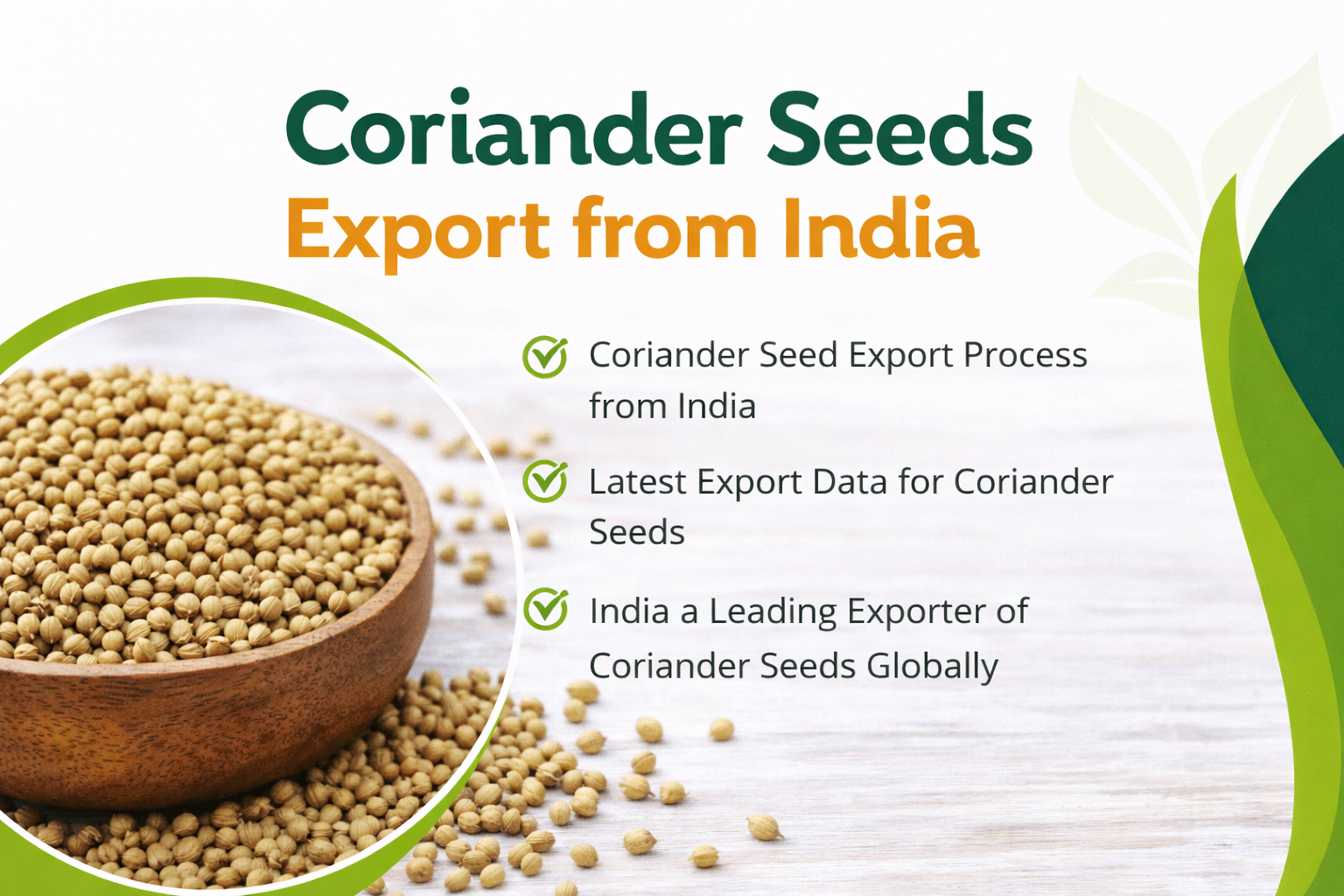
Short intro – Coriander seeds are one of the most important exports in the global Indian spices market, known for their rich aroma, flavor, and wide usage in cooking and food processing. Also called cilantro, coriander is used in various forms such as dry coriander seeds, fresh green coriander, and processed products like coriander powder. Along with enhancing taste, it also offers several coriander leaves benefits, making it popular across international cuisines.
India is one of the world’s biggest producers and exporters of Dhania Coriander (dry coriander seeds), widely used across global markets along with other Indian spices. It sends seeds to more than 40 countries, including the UAE, Malaysia, and the US. Coriander, also known as cilantro, remains a very popular spice because it is exported in thousands of metric tons every year. This is because of the global food and processing industries, where it is used in forms like coriander powder and spice blends such as those from brands like Hathi masala.
This is a great chance for Indian exporters, but growth is often slowed by problems like finding buyers, managing logistics, and getting into new markets. This guide talks about the most recent trends, prices, and processes for exporting. It also shows how partners like DandS International and platforms like apexherbex can help exporters make global expansion easier and get to high-demand markets more quickly.
FAQs
What are the different varieties of coriander seeds exported from India?
India exports several varieties of coriander seeds (Dhania Coriander), including:
- Eagle (Scooter) Variety
- Badami Variety
- Green (Parrot) Variety
- Split Coriander Seeds
- Powder Grade Coriander
- Machine Cleaned (MC) & Sortex Cleaned (SC)
What are the common challenges in coriander export?
Coriander seed export from India faces several challenges, such as:
- Quality & Standardization Issues
- Price Fluctuations in the Global Market
- Packaging & Storage Problems
- Documentation & Compliance
- Currency Exchange Risks
What is the HS code for coriander seed export?
The HS code for coriander seed export is 090921.
Is coriander seed export profitable?
Yes, coriander seed export is profitable because multiple economic and market factors work in your favor—especially if you operate smartly.
- High global demand for Indian spices
- Competitive pricing in international markets
- Strong production base in India
- Scope for value addition (powder, cleaned seeds)
- Favorable export policies and incentives
What Is the Latest Export Data for Coriander Seeds from India?
India is still the biggest exporter of coriander, including dry coriander seeds, and there is steady, strong demand for it around the world in the food and spice industries.
Important Information About Exports:
- Every year, India sends thousands of metric tons of coriander seeds to other countries.
- The UAE, Malaysia, Sri Lanka, and the US are the main markets.
More and more people want bulk coriander seeds and processed spice mixes, including coriander poewdr.
Trends in the Market:
- More and more people are choosing Indian Dhania Coriander suppliers because of the quality and smell.
- More people want it in the Middle East and Southeast Asia.
- The amount of exports changes depending on the season of the harvest and the global demand cycle.
Exporters need to keep an eye on this data. It helps find markets with a lot of demand, set the best prices, and grow businesses in the competitive coriander seeds export industry.
Which Countries Import the Most Coriander Seeds from India?
India’s coriander export from India is distributed across key global markets, with certain countries consistently accounting for a large share of total exports.
Country/Region | Estimated Share (%) | Demand Type | Key Insight for Exporters |
UAE | 20–25% | Bulk + Re-export | Acts as a gateway to the Middle East & Africa |
Malaysia | 12–15% | High Volume | Strong food industry demand |
Sri Lanka | 8–10% | High Volume | Stable and recurring imports |
USA | 8–12% | Premium + Organic | Higher margins, quality-driven |
Europe | 5–8% | Organic + Processed | Growing demand for organic coriander seeds |
Export Data Insights:
- India sends thousands of metric tons of dry coriander seeds to other countries every year.
- The top five markets account for more than half of all coriander exports.
- Due to trading and redistribution networks, demand is growing in the UAE.
For Indian exporters, focusing on these markets helps them reach more people and make more money, especially when they have strong distribution networks like Dands International.
Why Is India a Leading Exporter of Coriander Seeds Globally?
India is the biggest exporter of coriander from India, not just because it makes a lot of it, but also because it has a whole export ecosystem that helps with scale, pricing, and consistency.
Advantage in Production
- India is one of the biggest producers of Dhania Coriander (dry coriander seeds) in the world.
- Rajasthan and Madhya Pradesh are the main supply hubs.
- Ensures bulk exports are always available.
Quality That Buyers Around the World Want
- High oil and aroma content.
- Processing requires the same size and colour.
- Used widely in spice blends, powders like coriander powder, and
Strong Export Network
- Established coriander seed exporters and traders.
- Efficient mandi and sourcing system.
- Reliable bulk coriander seed suppliers.
Competitive Pricing Edge
- Lower production cost vs other countries.
- Better margins in coriander seeds wholesale export.
This combination makes India a preferred sourcing destination for global buyers looking for quality + volume + price advantage.
What Challenges Do Indian Exporters Face in Coriander Seed Export?
Buyer Acquisition and Low Conversion Rates
Despite strong global demand for Indian spices like coriander and green coriander, many exporters struggle to find consistent buyers. A significant portion depends on B2B platforms, where conversion rates are often estimated to be below 5–10%.
Logistics and Compliance Complexity
Exporting dry coriander seeds involves multiple certifications and documents. Even minor errors can delay shipments by several days or weeks.
Limited Distribution in International Markets
Even after successful export, many Indian coriander seed suppliers face challenges in reaching wholesalers and retailers abroad.
How Can Indian Exporters Find Buyers for Coriander Seeds Internationally?
B2B platforms and trade portals remain the most common starting point. Products like coriander powder, cilantro, and raw seeds are widely listed, but conversion rates remain low.
- Trade fairs help build long-term relationships.
- Direct outreach improves margins.
- Export distribution partners offer scalability.
- Platforms like apexherbex help connect exporters with global buyers more efficiently.
How Does the Coriander Seed Export Process from India Work?
Sourcing and Procurement
Export begins with sourcing coriander seeds from major producing states like Rajasthan and Madhya Pradesh. These regions also produce green coriander, valued for its freshness and coriander leaves benefits like cilantro in culinary and health applications.
Cleaning, Grading and Packaging
Seeds are processed to meet global standards and used in forms like coriander powder and spice mixes.
- APEDA registration
- FSSAI compliance
- Phytosanitary certification
Shipping and Delivery
Transit time: 10–25 days.
Distribution in International Markets
Partners like Dands International help scale distribution effectively.
What Documents and Certifications Are Required for Coriander Seed Export?
Core Export Registrations
- APEDA Registration
- FSSAI License
Essential Export Documents
- Commercial Invoice
- Packing List
- Bill of Lading
- Certificate of Origin
Quality and Safety Certifications
- Phytosanitary Certificate
- Organic Certification
- ISO Certifications
What Is the Wholesale Price of Coriander Seeds in India for Export?
Category | Price Range (₹/kg) | Export Relevance |
Regular Coriander Seeds | ₹90 – ₹140 | Bulk markets |
Premium Export Quality | ₹140 – ₹180 | High-grade buyers |
Organic Coriander Seeds | ₹180 – ₹250 | Premium markets |
Prices vary depending on:
- Seasonal harvest
- Export demand
- Quality (size, moisture, aroma)
- Logistics costs
How Does Distribution Work in International Markets Like UAE?
Entry into Local Markets
A large share of coriander seeds, including dry coriander seeds, is redistributed.
Role of Local Distributors
60–70% of spice trade flows through established distributors.
Warehousing and Supply Chain
Proper storage ensures quality retention, especially for products like coriander powder.
Why Distribution Matters for Exporters
Exporters who rely only on direct buyers often face limited growth. Working with partners like DandS International helps bridge this gap.
Why Should Exporters Work with an Export Distribution Partner?
- Faster market entry (30–50% quicker)
- Access to verified buyers
- Scalable growth
- Lower operational risk
- End-to-end support
Conclusion
The coriander export from India market offers strong global opportunities, driven by consistent demand for products like Dhania Coriander, dry coriander seeds, and processed forms like coriander powder. Along with other Indian spices, coriander continues to play a vital role in global cuisine, supported by its flavor and coriander leaves benefits.
However, success depends on execution—finding reliable buyers, managing compliance, and ensuring effective distribution. Exporters who combine the right pricing strategy with strong distribution support are better positioned to scale and secure long-term contracts.
Instead of navigating these challenges alone, working with experienced partners like DandS International or platforms like apexherbex can simplify market entry and help unlock consistent demand in key regions. If you are looking to expand your coriander export business globally, contact us to explore how we can support your growth with reliable distribution and market access.