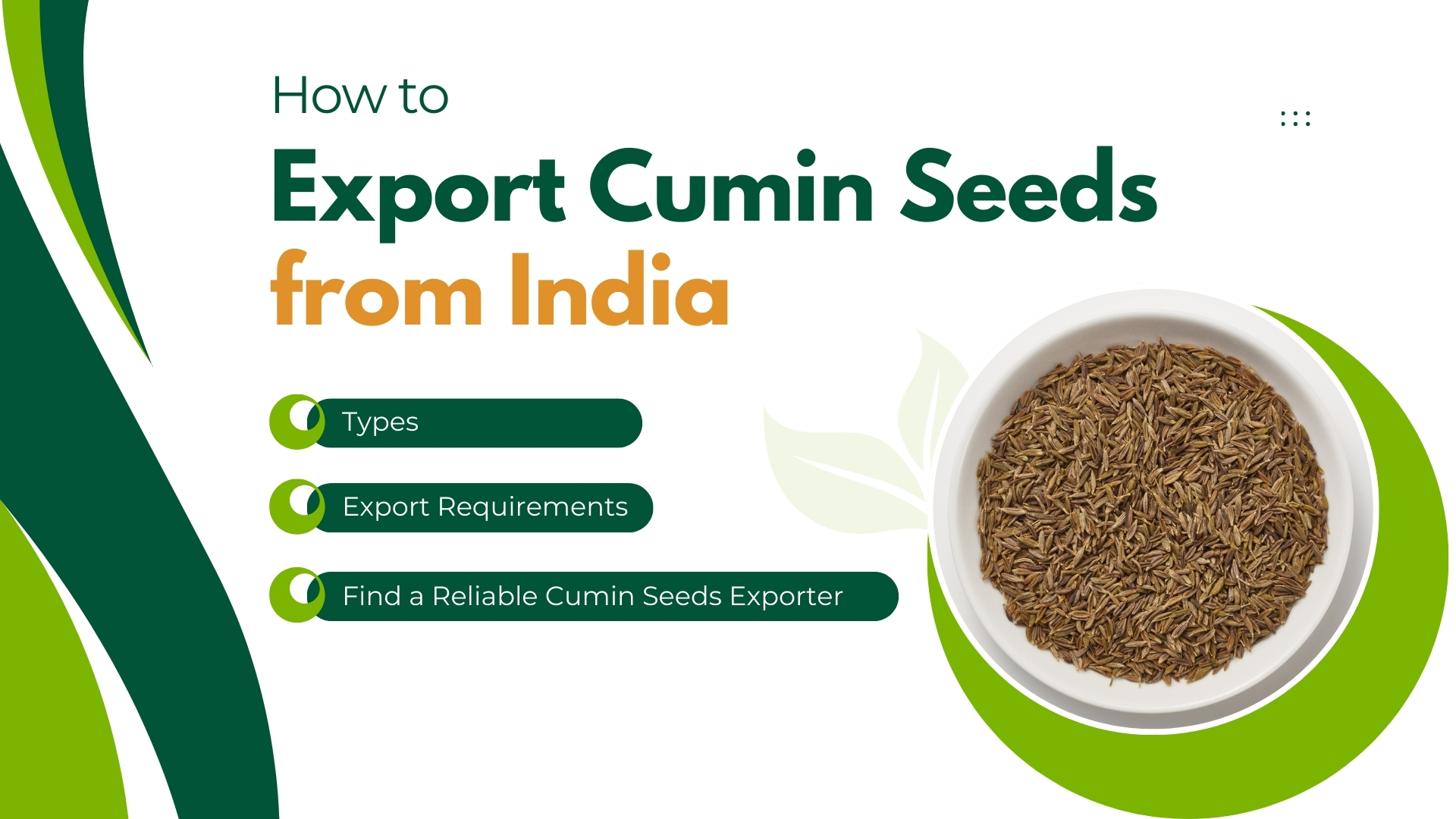
Cumin seeds or jeera are one of the most popular spices that are traded in the food industry across the world. The world cumin market is dominated by India, which produces over 70% of the world’s cumin, with the largest production being in Gujarat and Rajasthan. This massive production has seen cumin exportation in India become a major component of the world spice trade.
The UAE, Saudi Arabia and Iran are some of the countries that import large amounts of Indian cumin to process food, package spices in retail, and mix seasonings. According to trade reports, India exports hundreds of thousands of tonnes of cumin seeds annually, which serve the markets of the Middle East, Asia and Europe.
To exporters and international buyers, it is important to know the export process, quality standards and the trends in export price of cumin seed in order to develop a successful cumin import-export business.
Why India Dominates the Global Cumin Market
India has established a good reputation in the world spice market, particularly in cumin seeds. The nation is the largest cumin producer and exporter in the world, and it provides a large portion of the world’s demand. Due to the uniform quality, extensive agriculture, and well-developed export facilities, foreign consumers are dependent on the Indian cumin exports.
The well-developed agricultural ecosystem in India is one of the major factors that have contributed to this dominance. The collaboration between farmers, processing units, exporters and logistics networks is aimed at sustaining a robust spice import-export business, which guarantees a consistent supply to the foreign markets.
FAQs
Which country imports Jeera from India?
India exports jeera to several countries, such as the UAE, Saudi Arabia, Iran, the United States, Bangladesh, and European countries. The countries of the Middle East are still significant purchasers because of the high demand in food processing and spice markets.
How much is 1 kg of cumin?
The cost of 1 kg of cumin is determined by the quality, processing and market conditions. Export grade cumin seeds in India cost between 3 and 5 dollars per kilogram on average in the international markets.
Is Jeera's business profitable?
Yes, the jeera business has the potential to be profitable because of the high demand for cumin seeds in the world. The advantages of large-scale production in India, stable international markets and increasing demand in the spice trade are enjoyed by exporters.
Can seeds be exported from India?
Yes, it is possible to export seeds in India, provided that exporters comply with government regulations. Companies need to acquire an Import Export Code, Spices Board registration, and other necessary certificates, such as phytosanitary documentation, to export products to other countries.
Which country is the largest producer of cumin?
India dominates global cumin production and produces the largest share of cumin in the world. Most of the production comes from Gujarat and Rajasthan, which supply a large portion of cumin to global spice markets.
Major Cumin Producing Regions in India
The two major states in India produce a significant part of cumin because of the climate and soil conditions that are favourable to cumin farming.
- Gujarat
Gujarat is the most prolific state in India in terms of jeera production, with a significant portion of the national cumin production. The state is also a key centre of spice processing, grading and exportation.
- Rajasthan
Another major producer is Rajasthan, which produces high-quality cumin seeds which are highly exported to foreign spice markets.
These states combined constitute a significant part of the cumin production in India, which enables the exporters to ship the product all year round.
Reliable Supply for International Buyers
Global consumers like Indian cumin because exporters can offer:
- consistent grain quality
- large volume availability
- cumin seed export price in competition
- good global logistics and transportation
Due to these benefits, India has emerged as a reliable sourcing destination for the UAE, Saudi Arabia, Iran, and other key spice market importers.
This robust production base and export infrastructure still help in the development of the global cumin trading and export industry.
Types of Cumin Seeds Exported from India
When it comes to the import-export business of cumin seeds in the world, buyers usually seek certain kinds of cumin seeds depending on their flavour, appearance and use. The Indian exporters tend to export cumin in some of the most popular varieties and forms, according to the demand in the international market.
1. Regular Cumin Seeds (Jeera)
It is the most traded type in the international cumin trading market.
Key characteristics:
- Strong aroma and flavour
- Uniform elongated seeds
- The food processing and blends of spices are in high demand.
This variety is included in most bulk shipments to the UAE, Saudi Arabia, and Iran.
2. Black Cumin Seeds (Black Jeera)
Black cumin seeds, also referred to as black jeera, are another type of speciality that is exported in India.
Such seeds tend to be smaller and darker than normal cumin, and are primarily utilised in traditional food and herbal products.
3. Processed Forms for Export
Besides whole seeds, processed forms can be imported by buyers in the form of:
- Cumin Seed Powder
- Spice packaging Cumin Powder.
- Export-quality cumin is graded and cleaned.
The provision of various forms enables exporters to cater to various segments of the world spice market.
Step-by-Step Process to Export Cumin Seeds from India
The cumin import export business in India is not a complicated business to start, as it needs a few registrations, sourcing and export documentation. After these measures are taken, exporters will be able to deliver cumin seeds to foreign markets without any difficulties.
1. Acquire Import Export Code (IEC).
The initial process to commence cumin export in India is to acquire an Import-Export Code from the Directorate General of Foreign Trade.
This license enables companies to export Indian goods.
2. Register with the Spices Board of India
Exporters of cumin should also receive a Certificate of Registration as exporters of spices (CRES) issued by the Spices Board of India, since cumin is a spice product.
The registration is compulsory for companies intending to export spices to foreign markets.
3. Source Quality Cumin Seeds
The second step is to source high-quality cumin seeds in major production areas.
The majority of the exporters source cumin in:
- Gujarat
- Rajasthan
These areas are the largest producers of cumin in the world spice markets.
4. Grading, Packaging, and Cleaning
Cumin seeds are treated to achieve international quality before exporting.
This usually includes:
- Purgation and defilement
- Sorting seeds in terms of size and quality
- Export bags packaging
The right processing will make the product stay fresh when shipping it internationally.
5. Prepare Export Documents
In all international shipments, exporters have to prepare the following trade documents:
- Commercial invoice
- Packaging List
- Certificate of Origin
- Phytosanitary Certificate
- Bill of Lading
These documents enable the shipment to clear customs in the importing countries such as the UAE, Saudi Arabia and Iran.
This process assists exporters in developing a stable cumin export business and long term relationship with foreign purchasers.
Quality Standards and Export Requirements for Cumin Seeds
Quality and food safety standards are very crucial to international buyers in importing cumin seeds. Before exporting their products to the global spice trade, exporters need to make sure that their products comply with the requirements of the global spice trade in the UAE, Saudi Arabia, and Iran.
Good quality standards are useful in ensuring that exporters develop long term relationships with international purchasers in the import-export business.
Important Quality Exportation Parameters
There are several quality factors that buyers tend to consider when buying cumin seeds.
Quality Parameter | Typical Export Standard |
|---|---|
Purity Level | 98% to 99.5% |
Moisture Content | 8% to 10% |
Foreign Matter | Less than 1% |
Color & Aroma | Natural and uniform |
Higher purity and lower moisture levels usually indicate premium export-quality cumin seeds.
Mandatory Certifications for Cumin Export
Exporters must obtain certain certifications to legally export cumin from India.
Common export requirements include:
- Certificate of Registration as Exporter of Spices (CRES) from the Spices Board of India
- Phytosanitary Certificate to confirm the shipment is pest-free
- Certificate of Origin to get a customs clearance in the importing countries.
- Food safety standards of compliance with FSSAI.
Other certifications, including ISO or HACCP, might also be necessary for large international buyers.
Processing Standards for Export Quality Cumin
The cumin seeds also tend to undergo a number of processes before being shipped in order to be of international quality.
These include:
- washing to get rid of dust and dirt.
- sorting seeds according to size and homogeneity.
- Sortex cleaned processing or machine cleaned processing.
- International transportation packaging.
Adherence to these standards will help the exporters to always provide quality cumin seeds to the world spice markets.
Cumin Seeds vs Other Spice Seeds: Understanding the Differences
Differences
Buyers in the international import-export market occasionally mix cumin seeds with other similar spices. This normally occurs in bulk sourcing, particularly when the importers are comparing various spices.
Feature | Cumin Seeds | Caraway Seeds | Fennel Seeds |
Flavor Profile | Warm, earthy, slightly bitter | Mild, slightly sweet | Sweet, liquorice-like |
Appearance | Brownish-yellow, elongated seeds | Smaller, darker seeds | Light green, slightly curved |
Common Usage | Curries, spice blends, savoury dishes | European breads and cheeses | Sweet dishes, herbal teas |
Popular Markets | Middle East, South Asia | Europe | Asia and the Mediterranean |
Knowledge of these differences will assist buyers in making sure that they are buying the right spice to use in food processing, seasoning blends or retail packaging.
Cumin seeds are still one of the most commonly traded spices in the global market due to their high aroma and the variety of culinary products they are used in.
To the exporters and importers, it is important to identify these spices to prevent sourcing errors and to make sure that the correct product is delivered in the international cumin trading market.
Cumin Export Price and Market Trends
The cumin seed export price from India changes every season depending on production levels, export demand, and global spice supply. Since India is the largest producer of cumin seeds, price movements in Indian markets often influence global cumin trading.
Export prices usually vary based on cleaning quality and processing standards.
Cumin Type | Typical Export Range (per MT) |
Machine Cleaned Cumin | $2,800 – $3,200 |
Sortex Cleaned Cumin | $3,200 – $3,800 |
Organic Cumin Seeds | $3,800 – $4,500 |
Sortex cleaned cumin usually commands higher prices because of better purity and lower foreign matter content.
Several factors influence the global cumin export from India market.
• crop yield in Gujarat and Rajasthan
• international demand from Middle East markets
• weather conditions during harvest
• supply levels in competing spice-producing countries
Because of these factors, exporters and buyers closely monitor market trends before finalising bulk export contracts.
To international buyers, selecting the appropriate supplier is among the most significant processes in the import export business. A trusted exporter will guarantee quality, documentation and delivery.
Buyers of cumin in India must consider suppliers on a number of factors.
Export Experience
The seasoned exporters are aware of international paperwork, shipping processes, and quality assurance needed in the international spice trade.
Processing and Quality Control
Quality suppliers have adequate processing plants:
- sifting and sorting cumin seeds
- export quality Sortex
- hygienic packaging requirements
These measures will make the cumin seeds comply with international importation standards.
Certifications and Compliance
Buyers also need to ensure that the exporter has significant certifications, including:
- Spices Board registration
- food safety compliance
- phytosanitary certification of export shipments
Reliable Supply and Logistics
An Indian cumin seeds exporter must also be a reliable supplier of high quantities and be able to handle international deliveries.
D and S International companies deal with international buyers by sourcing cumin in the major producing areas in India and exporting the export-grade cumin seeds to the international markets.
Conclusion
India has remained the world leader in the spice market with high production of cumin in India and established export facilities. Exporters are involved in the supply of spices to the world markets, starting with sourcing quality cumin seeds to meet international quality standards.To importers in countries like the UAE, Saudi Arabia, and Iran, finding suppliers of cumin that are reliable will guarantee them a constant quality of their products and a smooth operation of international trade.
Collaboration with established exporters such as D and S International will allow international buyers to obtain export-quality cumin seeds, sustain quality, and establish long term relationships in the international cumin import-export business.