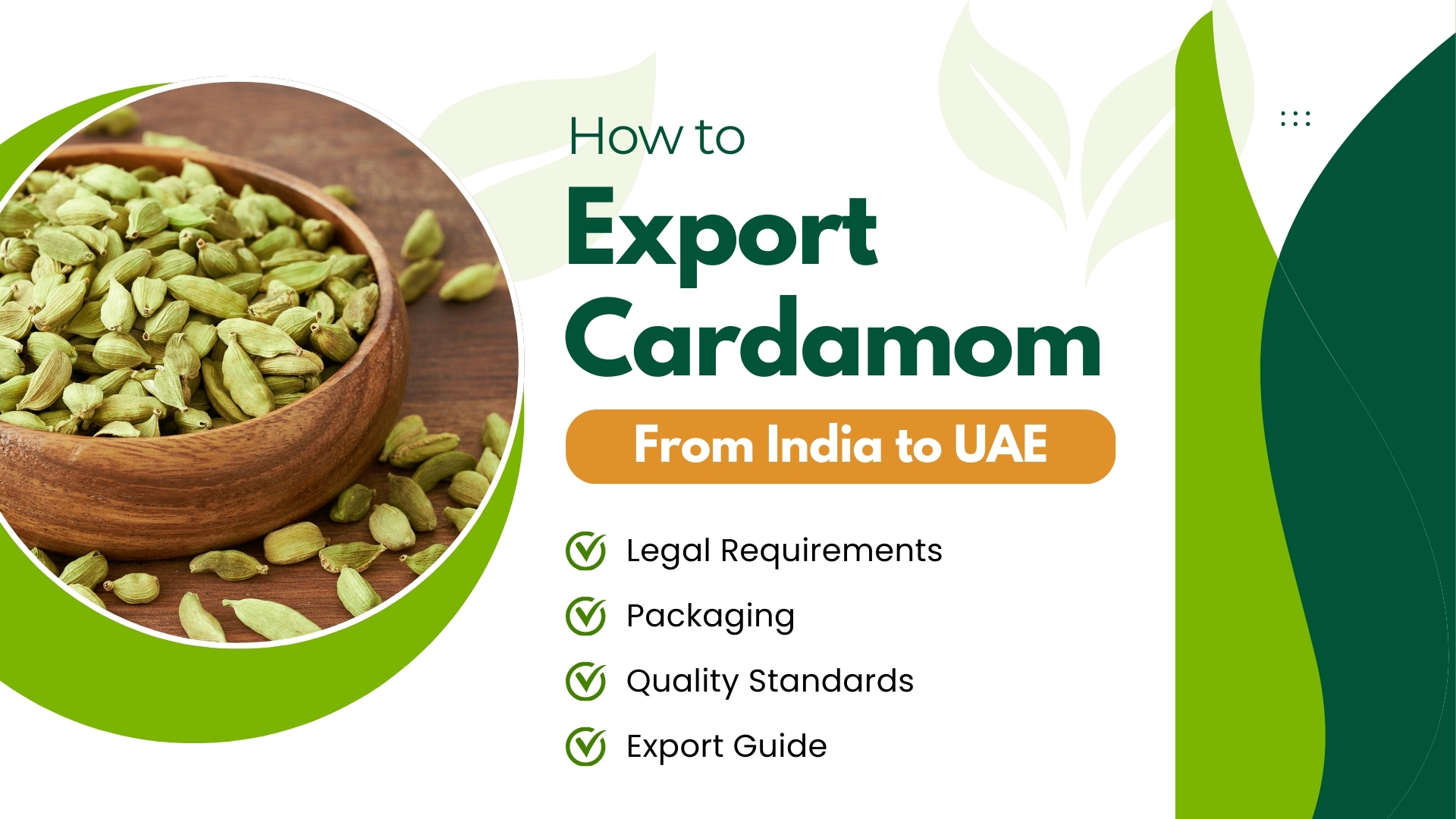
Cardamom is one of the precious ingredients that brings flavors, sweet and spicy, to various cuisines. Its unique flavor and medicinal properties make it one of the most in-demand products globally.
And, India is one of the major producers of the queen of spices, cardamom, with a production of approximately 20,969 metric tons in 2024-25. It offers premium green cardamom in both sizes, small and large. This makes India a favorable country for global exports, especially for bulk cardamom export to UAE.
The demand for cardamom is significantly high in the Middle East because it is used in culinary traditions and beverages. Thus, making it a consistently traded commodity between India and the UAE.
However, the process of supplying cardamom to the UAE is not that easy. It involves a lot of steps for an Indian supplier to make the trade successful.
This blog will help you accurately export your produce. Here we have discussed everything a supplier should know, from documents to quality checks. So, let’s dive in.
Why the UAE is a Key Market for Indian Cardamom Manufacturers
The United Arab Emirates is widely recognized as one of the most active trade hubs in the Middle East. Its strategic geographic location and advanced logistics infrastructure make it a gateway for goods entering the Gulf region.
In the case of spices, the UAE serves as a domestic demand and acts as a re-export center for neighboring countries such as Saudi Arabia, Oman, Qatar, and Kuwait.
Cardamom demand in the UAE is primarily driven by:
- Traditional Arabic coffee preparation
- Confectionery and dessert production
- Hospitality and restaurant industries
- Retail spice markets
Because of these uses, buyers in the UAE often prioritize high aroma, strong flavor, and consistent quality, qualities that Indian cardamom is known for.
India UAE trade agreements and growing economic cooperation have helped facilitate smoother trade flows, encouraging long-term partnerships between them.
FAQs
Which are the top cardamom-producing countries?
Guatemala, India, and Tanzania are the top three countries that produce green cardamom and supply it across the world.
What are the top 10 food products exported from India?
The top products exported from India are rice, chickpea, coconut, onion, tea, sugar, coffee, turmeric, cardamom, and cumin.
What products does the UAE import from India?
Many goods can be imported to the UAE, including agricultural products such as spices, grains, and pulses, as well as jewelry, textiles, medicines, and more.
Which country is the largest producer of cardamom in the world?
Guatemala is the largest producer, supplying more than half of the world’s cardamom.
What are the top cardamom HSN codes?
Here are the top Harmonized System of Nomenclature (HSN) codes for cardamom:
- 09083120 – Green cardamom (whole)
- 09083110 – Black cardamom (whole)
- 09083210 – Cardamom powder
Types and Grades of Cardamom Export From India
Understanding the varieties and grades of cardamom is important for both exporters and importers. Different markets and buyers may prefer specific grades depending on their intended use.
Major Cardamom Varieties
India primarily exports green cardamom, which is considered the highest-quality form of the spice. Some commonly recognized varieties include:
- Small Cardamom (Alleppey Green Extra Bold: AGEB)
This variety is known for its bright green color, larger pod size, and strong aroma. It is often considered one of the premium grades in the export market.
- Mysore Variety
Typically slightly lighter in color than AGEB but still highly aromatic and widely traded.
- Malabar Variety
This variety is commonly used for general spice markets and food production.
Each variety may be further sorted and graded depending on pod size and quality characteristics.
Size Grades Used in Export
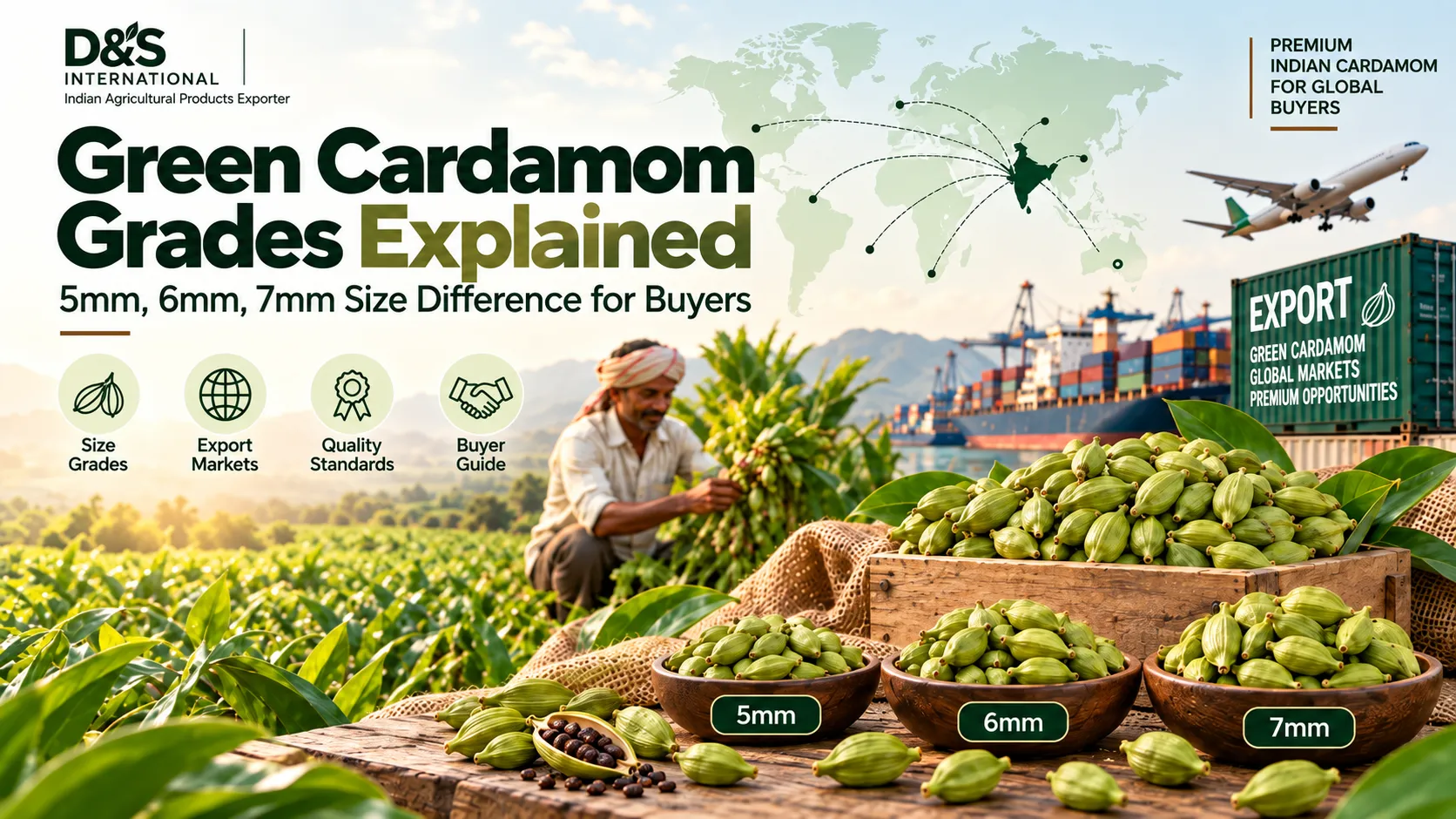
Cardamom in the international market is commonly graded based on pod size measured in millimeters. Typical export grades include:
- 6 mm
- 7 mm
- 8 mm
- Jumbo grades (larger pods)
Larger pods usually command higher prices because they are visually attractive and often contain more seeds.
Legal Requirements to Export Cardamom from India
There are several legal requirements that cardamom exporters in India need to fulfill to ensure that suppliers meet trade and food safety standards.
Import Export Code (IEC)
The Import Export Code is issued by the Directorate General of Foreign Trade (DGFT). It is a mandatory registration for any business involved in international trade from India. Without an IEC, companies cannot legally export or import goods.
Registration with the Spices Board of India
Since cardamom is a regulated
product, exporters must register with the Spices Board of India, which operates under the Ministry of Commerce and Industry.
The board oversees quality standards, export promotion, and compliance requirements related to spice exports.
APEDA Registration
The Agricultural and Processed Food Products Export Development Authority (APEDA) supports the export of agricultural products from India. While spice exporters primarily interact with the Spices Board, APEDA registration may be relevant depending on the nature of the business and export portfolio.
Food Safety Compliance (FSSAI)
Food exports must comply with the Food Safety and Standards Authority of India (FSSAI) regulations to ensure that exported products meet food safety requirements. These regulatory frameworks ensure that exported products meet international quality and safety expectations.
Documentation Required for Cardamom Export
Proper documentation is a crucial aspect of international trade. Missing or incorrect documentation can delay shipments or lead to customs clearance issues. Common documents required when initiating export service for cardamom include:
Commercial Invoice
This document contains the transaction details, including buyer information, product description, quantity, and value.
Packing List
A detailed list that describes the contents of each package in the shipment.
Certificate of Origin
This document certifies that the cardamom was produced or processed in India.
Phytosanitary Certificate
Issued by agricultural authorities, this certificate confirms that the shipment meets plant health standards and is free from pests and diseases.
Proof of Shipment
This document is issued by the shipping carrier and serves as proof of shipment.
Insurance Certificate
Insurance protects the shipment against potential risks during transit.
UAE Import Requirements: Cardamom Suppliers in India Must Follow
Importers bringing cardamom seeds into the UAE must comply with local food safety and labeling regulations.
UAE Food Import Regulations
Food products entering the UAE must meet national food safety standards to ensure consumer protection and product quality.
Product Registration Systems
In many cases, food products must be registered with the relevant municipal authority before being sold in the market. For example, Dubai uses an electronic system for registering imported food products.
Arabic Labeling Requirements
Food products sold in the UAE must include Arabic labeling. Labels generally need to contain information such as:
- Product name
- Ingredients
- Country of origin
- Production and expiry dates
- Storage instructions
Clear labeling ensures transparency for consumers and compliance with regulations.
Food Safety and Quality Compliance
Imported spices must also comply with standards related to:
- Pesticide residue levels
- Microbial contamination
- Proper packaging and storage
Category | Document |
| Import Export Code (IEC) |
Registration with Spices Board India | |
APEDA Registration | |
FSSAI Compliance | |
Export Documents | Commercial Invoice |
Packing List | |
Certificate of Origin | |
Phytosanitary Certificate | |
Proof of Shipment | |
Insurance Certificate | |
UAE Import Requirement | Follow the Import Regulation |
Product Registration System | |
Arabic Labelling Requirements | |
Food Safety and Quality Compliance |
Cardamom Processing and Export Quality Standards
India is the second largest exporter in the world for cardamom, with approximately $102 – $155 million. However, before cardamom is exported, it undergoes several processing stages to ensure quality and consistency. The typical process includes:
Cleaning
Dust, stems, and foreign material need to be removed before proceeding with the export process.
Drying
Cardamom pods are dried to reduce moisture content and prevent spoilage.
Grading
Pods are sorted based on size, color, and overall quality.
Sorting
Manual or mechanical sorting ensures uniformity within each grade.
Final Inspection
Quality checks are performed before packaging and shipment.
Proper processing helps maintain the aroma, flavor, and shelf life of cardamom during storage and transportation.
Dust, stems, and foreign material need to be removed before proceeding with the export process.
Cardamom pods are dried to reduce moisture content and prevent spoilage.
Pods are sorted based on size, color, and overall quality.
Manual or mechanical sorting ensures uniformity within each grade.
Quality checks are performed before packaging and shipment.
Packaging Standards To Be Followed by Green Cardamom Suppliers to Dubai
Packaging plays an important role in preserving the quality of cardamom during transit.
Common export packaging formats include:
- 5 kg cartons
- 10 kg cartons
- 25 kg bulk bags
- vacuum-sealed packaging
Good packaging should protect the product from:
- moisture exposure
- physical damage
- contamination
- aroma loss
Export packaging materials must also be durable enough to withstand long-distance transportation and storage conditions.
In addition to protective packaging, shipments should include clear labeling and batch identification for traceability.
Common Challenges in Cardamom Export Trade
Just like many agricultural products, cardamom exports too face certain challenges. Let’s discuss them briefly:
Just like many agricultural products, cardamom exports too face certain challenges. Let’s discuss them briefly:
Price Volatility
Cardamom prices often fluctuate due to changes in production levels, weather conditions, and global demand.
Quality Inconsistencies
Variations in harvesting and processing practices can lead to differences in quality across shipments.
Pesticide Residue Regulations
Different countries maintain strict limits on pesticide residues in food products. Exporters must ensure compliance with these standards.
Documentation Errors
Incomplete or incorrect documents can delay customs clearance and disrupt supply chains.
Storage and Moisture Issues
Improper storage or packaging can affect the aroma and quality of cardamom during transportation.
Challenge | Impact |
Price Volatility | Prices fluctuate due to production, weather, and global demand. |
Quality Inconsistency | Variations in harvesting and processing affect product quality. |
Pesticide Regulations | Exporters must comply with strict residue limits set by importing countries. |
Documentation Errors | Incorrect documents can delay customs clearance. |
Storage & Moisture Issues | Poor storage or packaging can reduce aroma and quality. |
Managing these challenges requires careful planning, quality control, and effective coordination between suppliers, exporters, and importers.Best Practices for Successful India–UAE Cardamom Trade
Long-term success in the spice trade often depends on maintaining strong relationships and consistent standards.
Some widely followed best practices include:
- maintaining consistent product quality
- conducting quality inspections before shipment
- ensuring transparent documentation
- sharing product samples before large orders
- establishing clear communication between trading partners
These practices help build trust and minimize potential trade disruptions.
Conclusion
Cardamom maintains its position as one of the most valuable spices that countries import export worldwide, while the commercial links between India and the United Arab Emirates create business possibilities for suppliers, exporters, and buyers.
India stands as a major source of high-quality cardamom because of its strong production capabilities and its established spice industry. The UAE functions as a regional trading hub, which enables access to multiple Middle Eastern markets.
Cardamom exports require multiple essential elements, which include maintaining product quality and meeting regulatory requirements, ensuring proper documentation, and establishing dependable trade relationships. The export process allows businesses to export spices from India to the UAE when they understand the requirements and establish permanent operating standards.
D and S International partners with a trusted Indian cardamom business to deliver the best yields to the UAE. Contact us to start your export business